 14 DAY TRIAL //
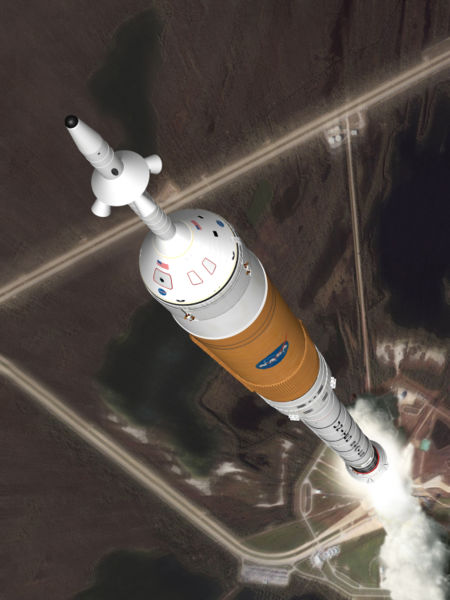
 The next generation of rockets that are currently being designed by NASA, to launch vehicles into space during future manned lunar and Martian missions, are looking kind of shaky. Literally! They shake so violently in the launch process that the rocket will probably disintegrate long before getting into the Earth's orbit. Computer models of the launch of the Ares I rocket indicate that vibrations are caused by the engines and could destroy the upper stage containing the Orion capsule, killing the astronauts in the process.
NASA plans to take a future manned mission to the Moon as soon as 2020, and probably to Mars as well. But you can't launch a vehicle into space without a powerful booster engine, can you? Thus, the first stage engine of the Ares I rocket will most likely consist of five reusable solid rocket boosters, very similar to those currently used in the launch of the space shuttles. But, unlike the space shuttle solid rocket boosters, the newly designed SRB's burn a special fuel mix.
A second rocket, currently in the design stage, is Ares V which will probably be used to carry massive loads into space. It also uses solid rocket boosters during the first stage of the launch which are disposed in a two-five segment configuration, doubling the thrust generated by the Ares I rocket. The problem is the computer simulations indicate that, during the primary acceleration phase, the SRB's produce gas vortices with identical resonating frequencies inside the engines, that add together resulting in a powerful vibration propagated through the whole body of the rocket.
That would not be so much of a problem, but the vehicle has not been designed to suffer such severe longitudinal forces, which may exceed the load tolerance of several parts of the rocket. The initial results of the study conducted by engineers from NASA compare the process to that of a boat speeding on the surface of a water body right here on Earth.