 14 DAY TRIAL //
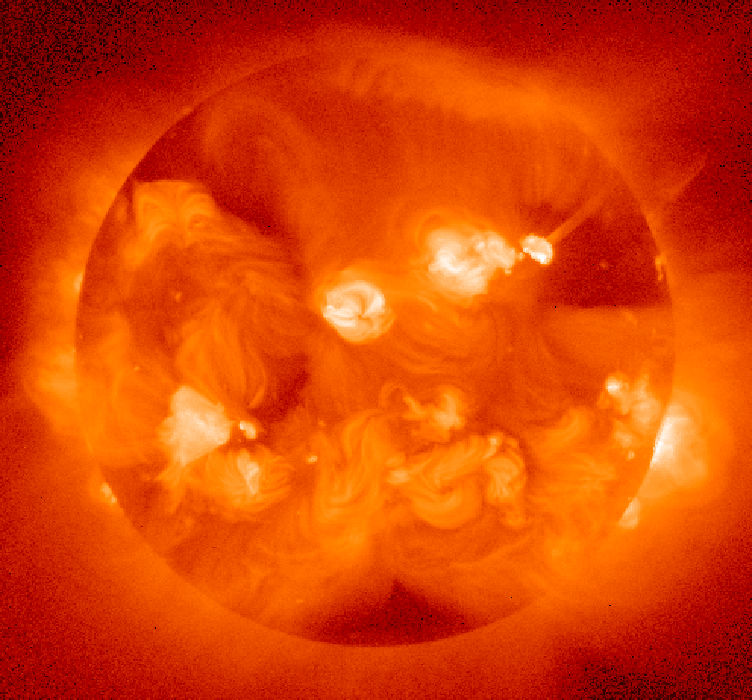
 Decades ago, investigators noticed that the Sun appeared to be operating in 11-year-old cycles. That is to say, episodes of intense activity on its surface alternated with periods in which solar storms and sunspots could barely be seen. Experts then began keeping track of these cycles, and they have been doing so ever since. Recently, we came out of the 23rd recorded cycle, but it was different from others. Now, experts propose a new explanation as to why that happened.
The thing about the past solar cycle was that its solar minimum – the period of little to no activity on the surface of the Sun – extended for a lot longer than normal. This caused a lot of concern among astronomers and solar physicists, who could not explain why the star was not picking up its activities. They were expecting to see more sunspots, solar flares, as well as increased levels of magnetic activity, and yet all they witnessed were a few medium-intensity sunspots. But a team of scientists from the High Altitude Observatory, and the University of California in Los Angeles (UCLA) believe they may have discovered the reason why this discrepancy appeared.
HAO researchers Mausumi Dikpati, Peter A. Gilman, and Giuliana De Toma, together with UCLA colleague Roger K. Ulrich, from the university's Department of Physics and Astronomy, propose their idea in a paper called “Impact of changes in the Sun's conveyor-belt on recent solar cycles.” The work appears in the latest issue of the esteemed scientific journal Geophysical Research Letters, which is published by the American Geophysical Union (AGU). HAO is located at the Boulder, Colorado-based National Center for Atmospheric Research (NCAR).
The new analysis argues that changes in the star's conveyor belt may have been the reason behind the prolonged solar minimum. The feature is represented by a flow similar to the one in Earth's oceans, which moves plasma on the solar surface from the Equator to the poles. Magnetic fluxes are also stirred up as the conveyor belt sinks and turns back to the solar Equator. During cycle 23, experts noticed that the poleward flow reached the solar poles, whereas in previous years it only reached about 60 degrees latitude.
This difference may be what caused the abnormally-long solar minimum. It was additionally found that the speed the flow had when returning was significantly lower than that recorded in other cycles. The research team created a computer model to explain the influence of the conveyor belt on solar dynamics, and learned that the slower speed, and the higher latitudes, the flow reached could indeed impact cycle duration, SpaceRef reports.