 14 DAY TRIAL //
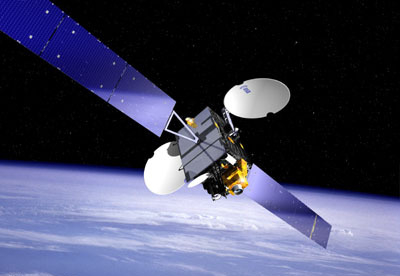
 It seems that the European Space Agency has made a habit out of having its satellites fly in formation, as a result of a successful similar campaign which took place in 2007. This year’s initiative will involve the two satellites from the previous operation, the ERS-2 and the Envisat. Their moving together is set to provide an in-depth and more accurate monitoring of certain aspects and processes taking place on the surface of our planet.
Both ERS-2, the agency's now “ancient” device, launched in 1995, and Envisat, which still stands as the world's biggest environmental satellite since its launch in 2002, are provided with Synthetic Aperture Radar (SAR) tools that acquire high-res photos of the Earth. The two satellites take photos of the exact same place, separated by an interval of 28 minutes, thereby allowing scientists to detect faint changes in the shape, structure or position of the observed item.
This technique, called InSAR, short for SAR interferometry, is best suited for applications such as terrain mapping, surface deformation detection or glacier motion. For example, the InSAR technology helped determine how fast some glaciers move (about 1 cm every half an hour, summing up to some 200 meters per year). This observational process goes both ways, as it also helps technicians enhance the used instruments and improve the quality of the results.
Based on the data obtained during the previous mission, the current one (which started on November 23rd 2008 and will end on January 27th 2009) is aimed at continuing the measurements of the glaciers' speed, observing the land-ice movement and developing elevation models over flat terrain. The results of this initiative could be used in order to detect sinks and natural carbon sources in the Kazakh Steppe, as well as wetlands in permafrost regions.