 14 DAY TRIAL //
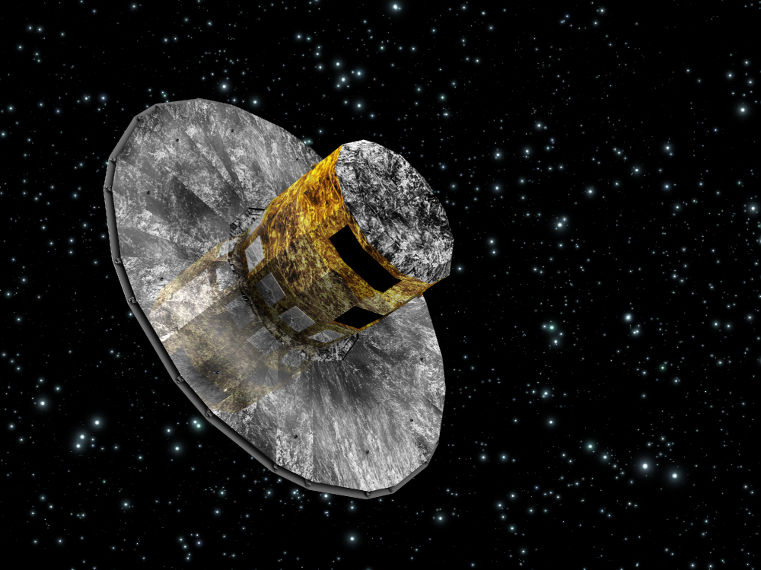
 The Gaia mission that the European Space Agency (ESA) is preparing to launch in the near future will feature the largest, most advanced digital camera ever to fly in space. The array will feature a resolution of about one billion pixels, which will be pieced together from 106 separate electronic detectors.
All of these instruments have just been mosaicked in a single array, thanks to tireless efforts made by ESA engineers. In its current configuration, the instrument will help Gaia create the most detailed, 3D map of the Milky Way.
Objectives of the new spacecraft will include conducting positional measurements of more than 1 billion stars of magnitude 20 or lower and determining their positions, distances, and annual proper motions with great precision.
Additionally, the mission also has to conduct spectrophotometric measurements of all these objects. The datasets will be used to provide astronomers with multi-epoch observations of each star. Last but not least, Gaia will conduct radial velocity measurements of all targets.
ESA has tentatively set Gaia's launch for March 2013. Mission controllers plan to launch the space probe aboard a Russian-built Soyuz delivery system, from the ESA Kourou Spaceport, in French Guiana, South America.
The primary scientific payload of the spacecraft is the array of 106 charge coupled devices (CCD) it will use to analyze a billion of our galaxy's stars. Chelmsford, UK-based e2v Technologies developed all the detectors the mission will use.
ESA experts are very pleased with the devices the company built. Each detector is thinner than a human hair, and smaller in size than a credit card. Each measures only 4.7-by-6 centimeters. Astrium France assembled all of the detectors in a 0.5-by-1 meter mosaic.
The efforts to install the devices took the entire month of May. Experts at Astrium – installing CCD at a rate of four per day – finished their complex work on June 1. The company is the primary contractor ESA selected for building the Gaia spacecraft.
“The mounting and precise alignment of the 106 CCDs is a key step in the assembly of the flight model focal plane assembly,” explains the ESA Gaia payload manager, Philippe Garé. All detectors need to be maintained at a temperature of 110 degrees Celsius in order to function properly.