 14 DAY TRIAL //
 At some point, 5 billion years from now, the Sun will begin to swell and will slowly engulf the first planets in its vicinity, including our own. But life would have been obliterated long before this process actually occurred. Still, this is not necessarily a scary scenario, since while scorching our planet, the Sun would thaw another one and make it hospitable to life, a recent study indicates. And if the Sun doesn't, then other stars will. It only remains that we reach those planets somehow.
As the weird plans of moving the Earth from harm's way show little probability and even less technological possibilities, it only leaves us with finding planets that are suited for housing our species. Up to now, the planet systems of these swelling red giant stars have been ruled out for being too dangerous, but the new research, more complex than previous similar ones, led by Werner von Bloh, of the Potsdam Institute for Climate Impact Research in Germany, suggests that some of those planets may be just right.
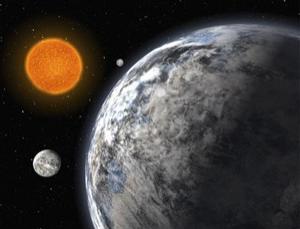
The research stresses on the conditions required by an oxygen-producing photosynthesis process, including a carbon dioxide-rich atmosphere and a proper temperature that would support liquid water. The planets would have to be larger than ours (super Earths), with a bigger core that would not cool easily and would support volcanic activity for longer, which, in turn, would provide the fuel for photosynthesis. In the beginning, these planets would be frozen, but they would thaw as the star swells, during it's later life stages lasting for about 3.7 billion years.
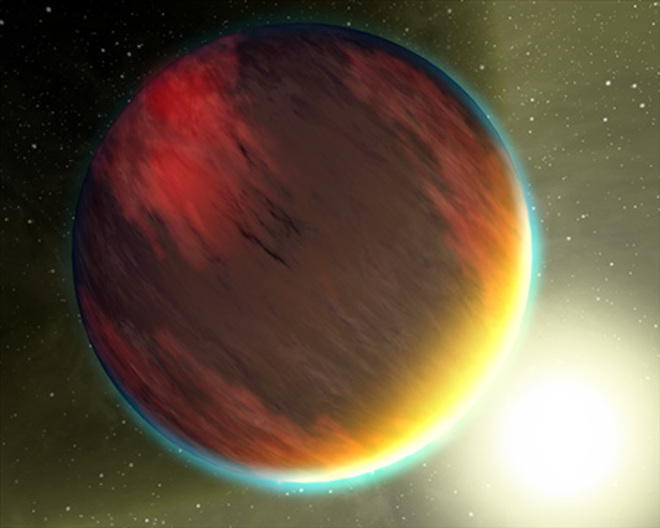
The perfect planet would be one ten times larger than the Earth, situated at about twice the distance between our planet and the Sun, with 90% of its surface covered by water. Recent observations have indicated that such super Earths are quite common. And it seems that finding water on planets is not such a difficult task either, since it has even been detected, at least in its gaseous form of vapors, on the "Hot Jupiter" exoplanet HD 189733b.
Still, James Kasting from the Pennsylvania State University argues that the optimal temperature for a photosynthesis-based life system would be about 50° C, which "would be almost uninhabitable for anything that lives on Earth except for some kinds of bacteria," he explains, as quoted by New Scientist, especially considering that the average surface temperature on Earth is of approximately 15° C.