 14 DAY TRIAL //
 Investigators believe that they may be on the right track towards detecting the predicted dark matter satellites that should be orbiting the Milky Way. These objects should attract clumps of gas and other forms of normal matter, which should be visible to existing telescopes.
Dark matter appeared as a necessity to explain the missing mass of the Universe. In order for the Big Bang equations to work out, the stuff needs to have some interesting properties, which would instill it with a certain type of behavior, Space reports.
If every one of these aspects is true, then dark matter should form large clumps around the Milky Way, as well as all other massive galaxies, regardless of whether they are spiral, barred or elliptical. However, practical observations have only revealed limited numbers of satellite galaxies.
According to astronomers, dark matter interacts with normal matter solely through gravity. Therefore, clumps made out of the stuff should be able to attract at least some large gas clouds, which would in turn emit sufficient light in visible wavelengths to allow for detection.
When this idea was applied in practice, experts found around 60 companions to the Milky Way, but that's a far cry from the thousands that were expected. However, experts from the Columbia University say that the research failed because their predecessors were only looking for stars.
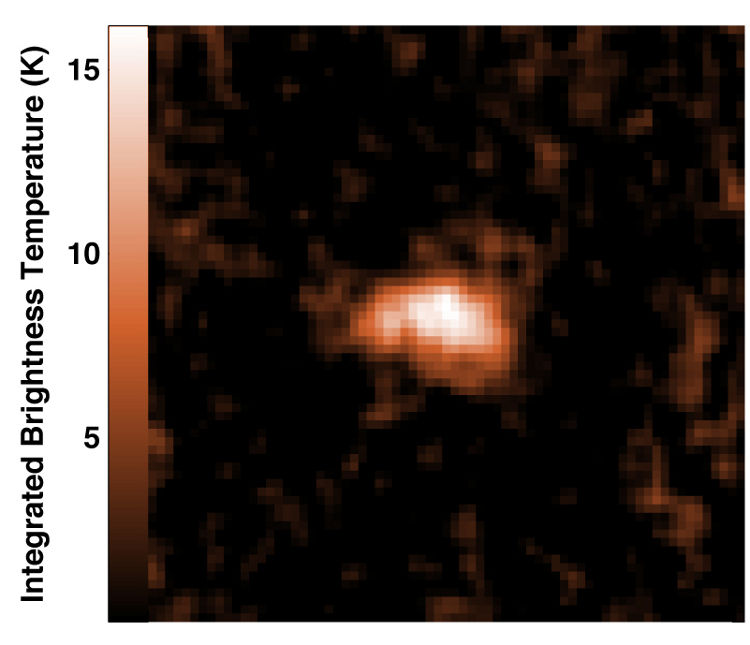
By using the Galactic Arecibo L-Band Feed Array HI (GALFA-HI) survey as a starting point, the team decided to search instead for hydrogen gas accumulations. These were bound to be less visible, but more common. The Arecibo Observatory is the largest, single-aperture radio telescope in the world.
“The discrepancy between what these cold dark-matter models show and the observations show in terms of the number of low-mass galaxies – that's called the missing satellites problem,” Columbia astronomy graduate student Jana Grcevich explains.
She and her team were able to identify 54 additional candidates, all of which were announced at the 219th meeting of the American Astronomical Society, which was held in January, in Austin, Texas.
“You see something that looks an awful lot like the feature you would expect from the type of stellar population you would predict in a Local Group dwarf galaxy. That's really hinting that something [is] going on at that position,” Grcevich concludes.