 14 DAY TRIAL //
 We like to think highly of ourselves, in particular but also in general. The human race did this, the human race did that, we could someday go, become, explore... But most people never really realize how insignificant the Earth really is in the grand scheme of the Universe.
If we compare Earth's size with that of some of the most important celestial bodies we have discovered so far, it makes most of us think that we're nothing but ants swarming around in our little ant nest under the umbrella of a tree, where we believe that we're so important, doing our daily chores, going to work everyday so we're able to eat and drink and almost never considering the immensity of the jungle that surrounds us.
To show you that I'm not just making a philosophical essay for the purpose of filling up space, let's look at the size of our Earth compared to that of some of the most famous planets and stars that we know of.
The Solar System
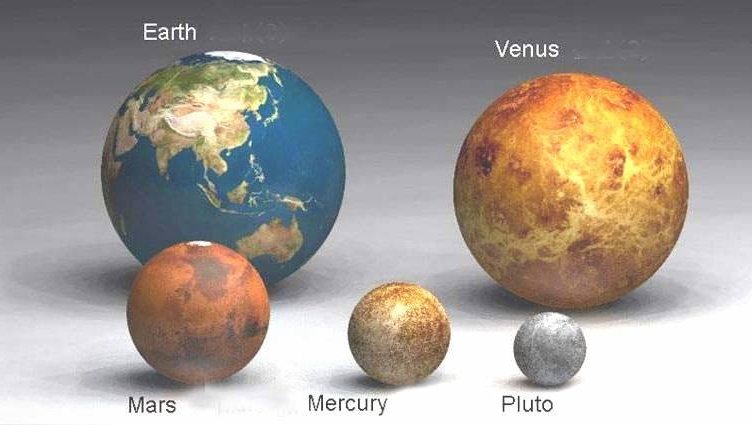
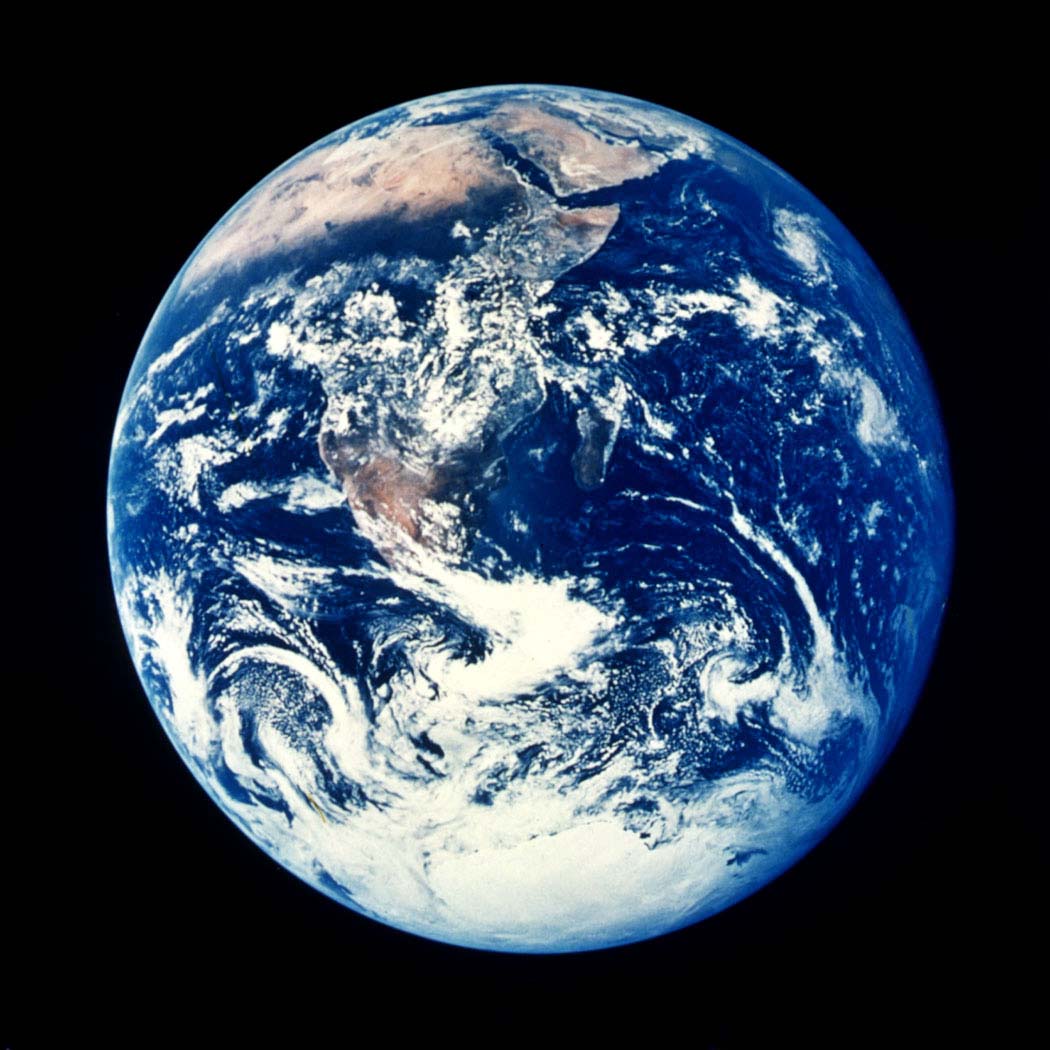
Earth is the third planet from the Sun and is the largest of the terrestrial planets in the Solar System, in both diameter and mass. With an equatorial diameter of 12.7 thousand kilometers, (7.8 thousand miles), it's two times larger than Mars and almost three times larger than Mercury, the smallest planet in the solar system. Venus is the only planet that comes close, but at only 0.95% of Earth's diameter, we're still the largest. If we don't consider Pluto, now degraded from its planet status, that's pretty much all we can brag about: our planet is larger than three of the planets in the system.
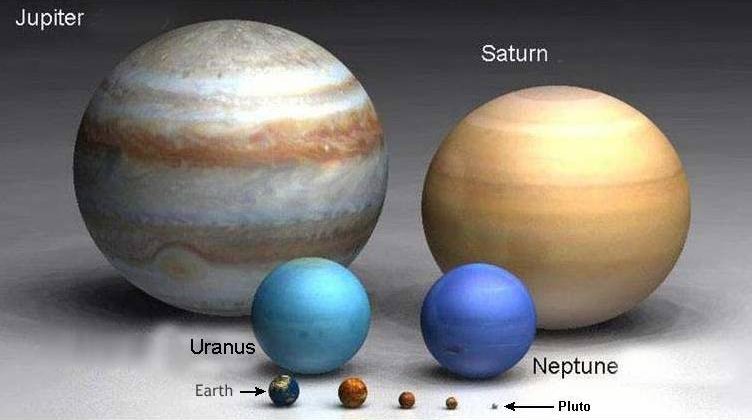
Now let's not forget that we've got four more planets to go:
Neptune is 17 times the mass of Earth and 3.8 times larger, Uranus four times larger than us and then the gas giants come: Saturn is 9.4 times larger than our planet, but the champion title goes to Jupiter, the giant of our not so huge solar system, more than 11 times larger than Earth and two and a half times as massive as all of the other planets in our solar system combined.
Impressive, huh? Now let's get to see how small we are compared to some stars out there.
The Sun
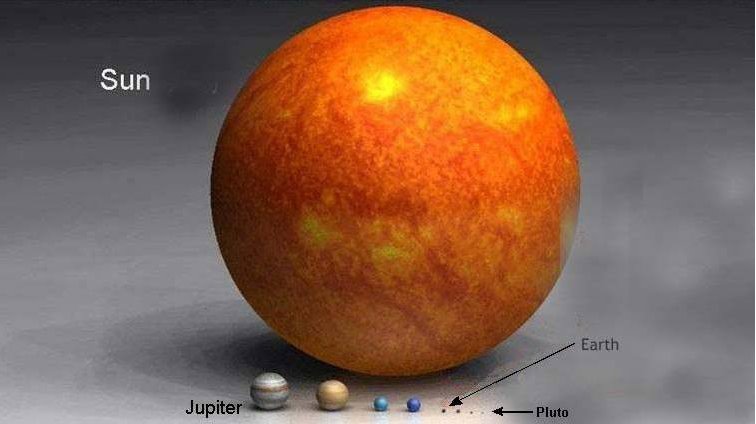
You probably know by now that we're no match for our Sun. Now, the figures get complicated. The fact that the Earth and other matter, including other planets, asteroids, meteoroids, comets and dust, make up for 0.2 percent of the mass of the entire system is kind of scary and trying to express the size of the size is an even greater challenge: the diameter of the Sun is 109 times larger than Earth's, making us look like a spot on its surface. What the heck, even some sunspots are larger than our not-so-big-anymore planet.
Other stars
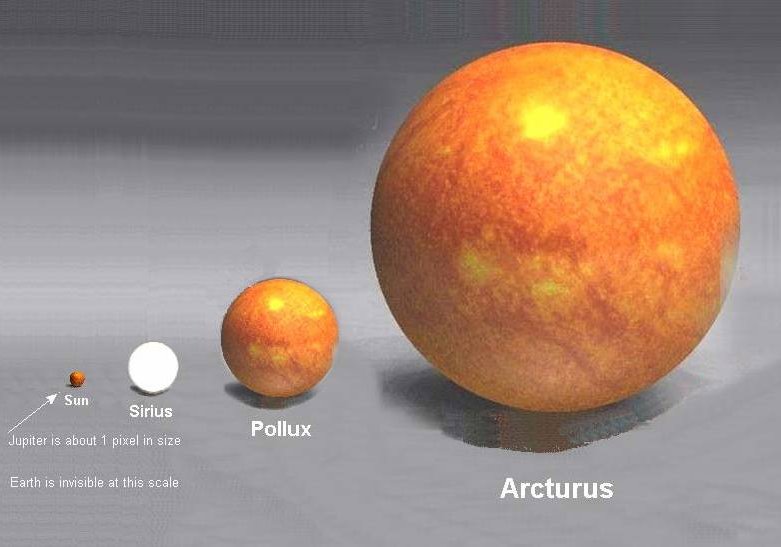
If you thought our Sun was big, you're wrong. It's just a medium-sized star. Astronomers estimate there are about 100 thousand million stars in the Milky Way alone. Outside that, there are millions upon millions of other galaxies also! Let's take Sirius, for instance. The brightest star in the night-time sky, located in the constellation Canis Major, it can be seen from almost every inhabited region of the Earth's surface. Any clues on how large it is? The white dwarf is half the mass of the Sun packed into a volume roughly equal to the Earth.
That's something to smile about, we're about the same size as dwarf star. Hooray! Now, if we look at Pollux, another of the brightest stars in the nighttime sky, our enthusiasm suddenly wears off. Its diameter is 16 times that of our Sun, so there's no point in mentioning that of the Earth.
Now, let's go to some really heavy stuff: Arcturus, the third brightest star in the night sky, located in the constellation Bo�tes, is a red giant star, at least 110 times brighter than the Sun and 32 times larger in diameter.
The Giants
Entering the heavyweight class of the known Universe, I present you Betelgeuse, the second brightest star in the constellation Orion, a red supergiant and one of the largest known to man. If we replaced the Sun with Betelgeuse, its outer surface would be somewhere between Mars and Jupiter. Is that big enough for you?
No? All right then. Here's the Titanic of all stars, a class M supergiant star. 10,000 times more luminous than our Sun, it is also almost 18 times its mass. The diameter is truly impressive: 1,400 times that of our Sun, which makes the Earth look like a flea on its surface. That's how small we really are.
The Pale Blue Dot
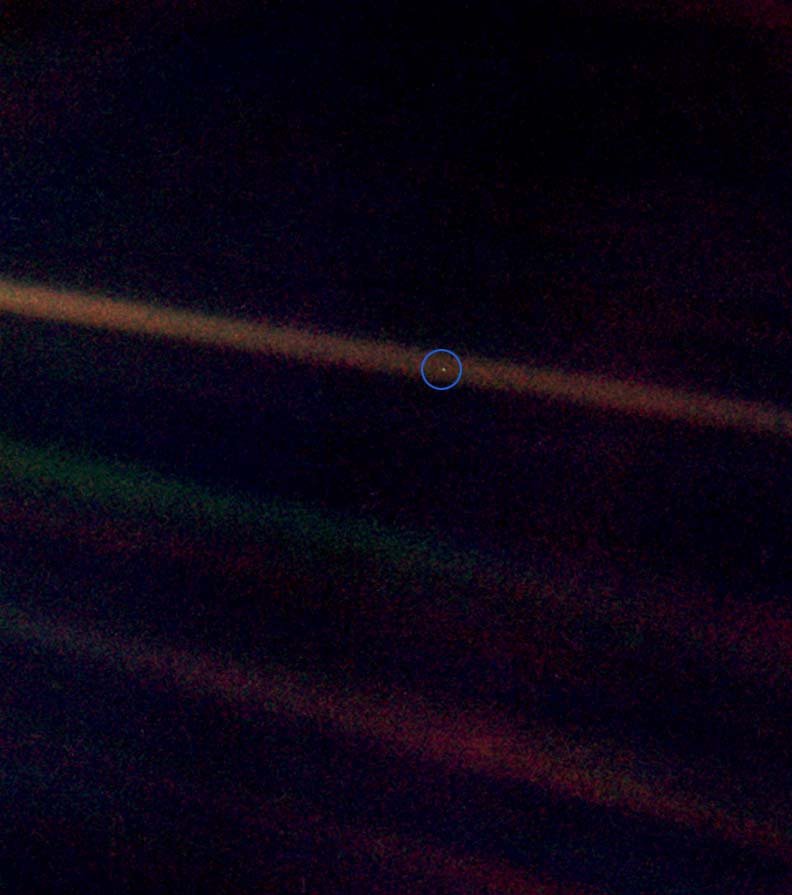
Nothing really proves how insignificant our planet is in the sea of stars and dust that makes up the known Universe, than the famous "Pale Blue Dot" photograph of the Earth, taken by Voyager 1, then located four billion miles away.
This picture shows Earth as a dot suspended in a beam of sunlight, situated against the backdrop of the Solar System. The saddest thing is that voyager was only its vantage point on the edge of the solar system.
If you're already depressed by now, I leave you with a quote from astronomer Carl Sagan, who wrote a book inspired by the photo:
"We succeeded in taking that picture [from deep space], and, if you look at it, you see a dot. That's here. That's home. That's us. On it everyone you know, everyone you love, everyone you've ever heard of, every human being who ever was, lived out their lives. The aggregate of all our joys and sufferings, thousands of confident religions, ideologies and economic doctrines. Every hunter and forager, every hero and coward, every creator and destroyer of civilizations, every king and peasant, every young couple in love, every hopeful child, every mother and father, every inventor and explorer, every teacher of morals, every corrupt politician, every superstar, every supreme leader, every saint and sinner in the history of our species, lived there - on a mote of dust suspended in a sunbeam."