 14 DAY TRIAL //
 Each year, the flu and cold epidemics strike in the general population without warning, but always around the same time. The pathogens spread like wildfire, and yet researchers still don't know precisely how this happens. A new research has recently taken a closer look at the issue.
The situation is especially worrying for the school system, given that children spend a lot of time in large communities, and also that they are more prone to getting sick than healthy adults.
Given that the population is rising, and that healthcare systems are overwhelmed by the costs of addressing an epidemic, researchers are now beginning to focus more and more effort into preventing the spread of contagions.
In order to do that, experts at the Penn State University have turned to human-networking theory, which they hope will aid them in tracking down pathogens' spread patterns.
The infectious diseases the group is investigating include SARS, the influenza, the common cold and whooping cough. All conditions can spread like wildfire through the populace, experts say.
Using a large team of volunteers, Penn State biologist Marcel Salathé has developed an approach that allows him to keep track of how many disease-spreading events are likely to occur within 24 hours.
The expert used a team of 788 high school volunteers to conduct this investigation, details of which appear in the latest issue of the esteemed journal Proceedings of the National Academy of Sciences.
The PNAS work was sponsored by joint grants from the National Science Foundation (NSF) and the National Institutes of Health (NIH).
“Contact networks, which are shaped by social and cultural processes, are keys to the spread of information and infection,” explains the NSF program director for cultural anthropology and the ecology of infectious diseases, Deborah Winslow.
“Before this research, the study of contact networks had been hampered by the lack of good data on their formation and structure,” the official goes on to say.
“This setting proved a closed population in which the whole network could be determined. By collecting real-time network data, the researchers improved significantly on the usual error-prone techniques that depend on asking informants to recall their interactions,” the expert adds.
“An interaction isn't necessarily a conversation. Even when people aren't talking, they might be sneezing and coughing in each other's direction, bumping into each other, and passing around pathogens,” Salathé explains.
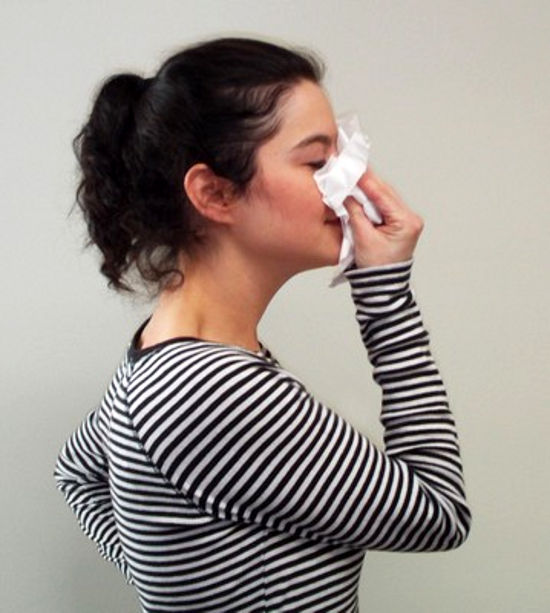
Given the results of this study, common protection measures such as covering your mouth when sneezing or coughing become even more important than before, especially in public.