 14 DAY TRIAL //
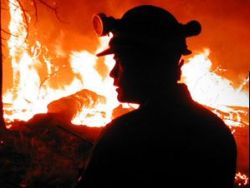
 Early Sunday morning, July 23, an abandoned campfire in Cleveland National Forest erupted into a 7,000-acre wildfire that continues to spread. Now known as the Horse Fire, it threatens more than 1,500 homes and 100 commercial properties near San Diego, California.
Within 24 hours, communications expert Hans-Werner Braun and his collaborators from the NSF-supported High Performance Wireless Research and Education Network (HPWREN) were on the scene. Recruited by the California Department of Forestry and Fire Protection (CDF), HPWREN researchers set up hardware at key points to allow firefighters in remote locations to communicate by a wireless link from the Horse Fire incident command post to the Internet.
The critical lifeline is allowing firefighters battling the blaze to coordinate with reinforcements and resources miles away. This was the sixth HPWREN deployment to aid CDF and the first in which the researchers, in collaboration with the San Diego Sheriff's Department, deployed Voice-over-IP technology to secure the communications link.
In an ironic exchange, researchers completed the effort with the support of a new CDF information technology specialist, Doug Mitchell, while HPWREN team member and retired fire captain Ron Serabia, had been recruited to fly in the firefighters' air attack and direct air-drops of fire retardant.
"Our efforts to enable cyber infrastructure have the potential to draw together various people and agencies to address research, education and public safety issues, and we certainly see this during emergency situations such as wildfires," says Braun, a research scientist at the San Diego Supercomputer Center at the University of California, San Diego, and the principal investigator on the HPWREN program. "For me, this has been one of the most pleasing aspects of HPWREN."
NSF's HPWREN collaboration involves researchers from the San Diego Supercomputer Center and Scripps Institution of Oceanography, both at the University of California, San Diego, and San Diego State University (SDSU). The HPWREN team will remain on call throughout the fire season.