 14 DAY TRIAL //
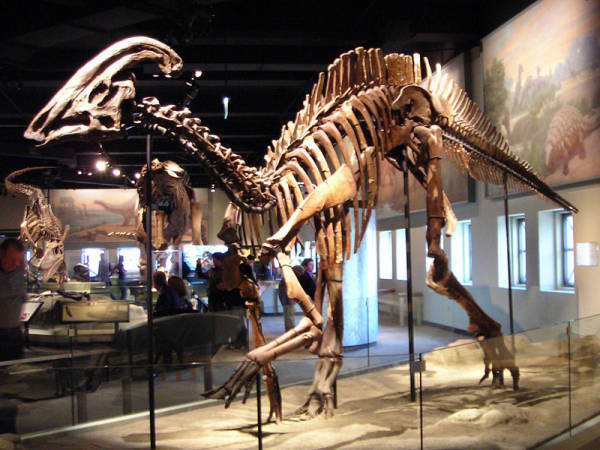
 Never underestimate the power of sediments, anthropologists always say, as they can save valuable details over millions of years. And few are the circumstances in which they were more right. In their study of the fossilized remains of a duck-billed hadrosaur family specimen, they noticed cell-like structures imprinted in the rock, which gave them a never-before encountered opportunity to look back in the past millions of years, and understand what the differences between the skin of old dinosaurs and that of their modern descendants were.
Very much to their amazement, they learned that the animals that lived up to 65 million years ago were, in fact, remarkably similar in skin structure to their descendants. In a review of the fossil, which they published in the latest issue of the scientific journal Proceedings of the Royal Society B, experts from the University of Manchester, led by Paleontologist Phil Manning, used the most modern investigation techniques at their disposal to extract as much information from the unique fossil as possible, the BBC News informs.
“We're looking at the altered products of proteins from the skin of this animal, locked within the three dimensional mineralized skin. You're looking at cell-like structures; you slice through this and you're looking at the cell structure of dinosaur skin. That is absolutely gobsmacking,” Manning told the UK news agency. The experts believe that the animal they are now studying at one point in its life fell inside a watery grave, in which mysterious circumstances led to fine sediments inside the water interacting with something on the dinosaur's skin, creating a cement of sorts.
These sediments is what allowed the fossil to be preserved at such an impressive level of detail. It was found in North Dakota in the US, so researchers named the specimen “Dakota.” Radiometric dating shows that the reptile lived around 66 million years ago, shortly before the last Great Extinction blew almost all life on Earth to smithereens. “If you've got a hypothesis and you can't test it, it remains a hypothesis. Now we've had an exceptionally preserved dinosaur which has allowed us to ask that question and answer it for the first time,” the UM professor added.
He also said that the researchers might have found the animal's Achilles' heel, when they noticed that its otherwise rough skin was soft in the regions where the tail and the hind legs met. “If you understand the distribution of these structures in the skin of a prey animal, you can understand something about predator-prey interactions, and it might explain some of the hadrosaur fossils we see with these bite marks,” Manning concluded.