 14 DAY TRIAL //
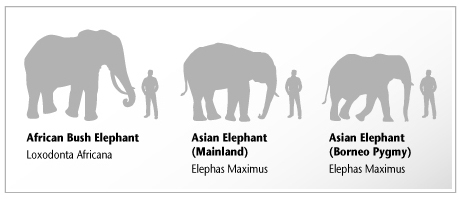
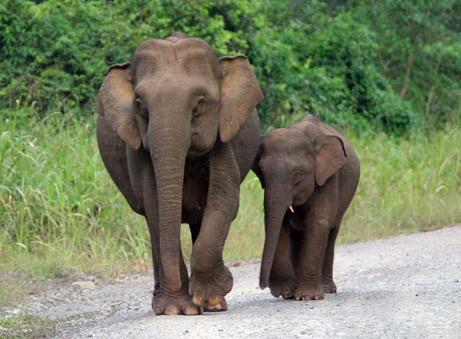
 This is a dwarf among elephants: the pygmy elephant of Borneo is one meter (3 feet) shorter than its mainland Asian elephant counterparts and remarkably tame and passive. Now, these gentle creatures are menaced by the shrinking and fragmentation of their habitat, the forests.
A new research made by the World Wide Fund for Nature has found there are probably no more than 1,000 left, much less than the previous estimate of 1,600 individuals.
Today these elephants survive only in the northeastern part of Borneo Island, in the Malaysian state of Sabah and satellite tracking revealed that the remaining herds prefer jungles on flat lowlands and in river valleys, the same areas hinted by loggers and oil palm plantations. Human activity pushed elephants to unsuitable swamp areas and restricted their ranges to narrow corridors.
"About 40 % of forest cover in the Malaysian state of Sabah, where most Pygmy elephants live, has been lost to logging, plantations and human settlement over the last four decades," said the Gland, Switzerland-based WWF.
"The areas that these elephants need to survive are the same forests where the most intensive logging in Sabah has taken place because flat lands and valleys incur the lowest costs when extracting timber," said Raymond Alfred, head of WWF-Malaysia's Borneo Species Program.
Malaysian officials accused Western activists of attempting to undermine the palm oil industry by pointing that forest clearing in Malaysia and Indonesia is a menace to wildlife and they claim that most palm oil plantations are found where forests were cleared long ago for crops like rubber.
"The conversion of forests to plantations remains the biggest threat to Sabah's elephants, because no plantation can provide the types and amounts of food necessary to sustain breeding populations of elephants," WWF researchers signaled. "Sabah has lost 40 % of its forests due to human settlement and plantation creation in the last 40 years".
The research revealed that some of the elephants were foraging five times more than normally due to the human impact. A herd of up to 45 elephants normally moves up to 1.2 miles (2 km) a day. But now they can move 3.9 miles (6.4 km) in just one day.
The loss of habitat makes them more prone to contact with people and their crops, triggering conflict with humans which end with the capture or poisoning of these little Dumbos.
"Until recently, it was believed Borneo pygmy elephants were descendants of a domesticated herd abandoned on the island by the Sultan of Sulu in the 17th century," WWF said.
But a 2003 DNA analysis revealed they were a distinct subspecies of Asian elephants, isolated from the mainland populations 300,000 years ago, a fact that triggered a new effort to conserve them.
The pygmy elephant is not included in the World Conservation Union's Red List of Threatened Species, which classifies about 40,000 species according to their risk of extinction, even if in 1996 the Asian elephant was declared "endangered." "An initiative aimed at conserving 240,000 square kilometers (92,650 square miles) of rain forest straddling the border between Brunei, Indonesia and Malaysia should ensure that most herds will have a home in the long term." said Alfred. "Currently, it isn't possible to say we are in a position to control the species. For now, giving them more space is the most important thing," said Ajay Desai, a species specialist with the conservation union.
This subspecies differs from other Asian elephants by being more rotund, having straighter tusks, a longer tail, a shorter trunk and bigger ears.
Still, these pygmy elephants can ingest up to 150 kilograms (330 pounds) of vegetation daily, from palms to grasses and wild bananas. One of their delicacies is the large thorny durian fruit, which smells the worst in the world. These elephants often roll the entire fruit in mud so they can swallow it with spikes and all. This way the seeds pass unaffected through the elephant's gut and the animal further disperses the tree. This is just one of the elephant's ecological roles.