 14 DAY TRIAL //
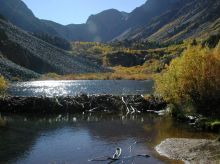
 Beavers, long known for their beneficial effects on the environment near their dams, are also critical to maintaining healthy ecosystems downstream. Researchers have found that ponds created by beaver dams raised downstream groundwater levels in the Colorado River valley, keeping soil water levels high and providing moisture to plants in the otherwise dry valley bottom.
Cherie Westbrook of Colorado State University and colleagues there and at the U.S. Geological Survey in Fort Collins, Colorado, conducted a three-year study in Rocky Mountain National Park, examining valley ecosystems downstream in the Colorado River. They noted that water diverted by beaver dams is forced out of the natural stream channel and spreads across and down the valley for hundreds of meters. In addition, dams built on the river changed the direction of groundwater flow in the valley. The changes caused water to infiltrate the river banks and flow underground toward the sides of the valley, instead of down the center of the valley.
The researchers suggest that the elevated moisture levels found in soil surrounding the dams would otherwise require water from a very large natural flood, which they estimate as the 200-year flood, to achieve the same expansive water availability to the valley bottom. Additionally, beaver dams built away from natural river channels further redirect water across the valley, enhancing the depth, extent, and duration of inundation associated with smaller floods; they also elevate the water table to sustain plant and animal life during the dry summer season.
"This study broadens the view of the importance of beaver in the valley bottoms beyond the upstream ponds," Westbrook said. "We found that upstream ponds were not the main hydrologic effect of the dams in the Colorado River valley. Instead, the beaver dams greatly enhanced hydrologic processes during the peak flow and low flow periods, suggesting that beaver can create and maintain environments suitable for the formation and persistence of wetlands."
The study comes as the beaver population in Rocky Mountain National Park is dwindling. Approximately 30 of the animals currently live there, down from a high of nearly 600 estimated in 1940. The authors caution that additional reductions in the population could harm the current hydrologic balance in the river valley and affect the area's water cycle and soil conditions, potentially changing plant species and influencing the overall diversity of the ecosystem in the future. They suggest that although there are multiple explanations for the reduction in beaver population, such as alterations in the flow along the Colorado River, similar hydrologic effects downstream likely affect river systems worldwide.