 14 DAY TRIAL //
 Recently published reports indicate that by coming up with ways to control the breathing and photosynthesizing processes in living organisms, scientists could eventually aid the biofuel industry in being much more efficient than it presently is.
The Proceedings of the National Academy of Sciences journal just published the results of a study carried out by Dr. Luning Lu and Professor Conrad Mullineaux, both employed at Queen Mary's School of Biological and Chemical Sciences, London.
These scientists presumably argue that, as a result of placing various types of cells under different lighting conditions, they eventually managed to influence the paths used by electrons to move within said cells. ScienceDaily informs us that this could lead to our being able to improve on our solar-powered biofuel production in the not-too-distant future.
For those unaware, solar-powered biofuel is a type of biofuel that results from having organic matter converted into an energy source by means of sun-power.
Given the fact that the process of photosynthesis is responsible for converting both solar power and organic materials into energy providers, it is only logical that, were we able to control this natural phenomenon, it wouldn't be long before we could use this ability in favor of the environment and of the human society.
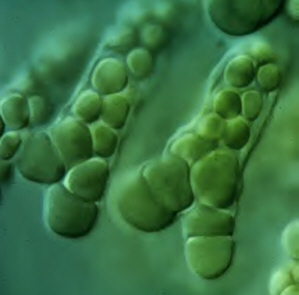
The researchers' test subject was the Cyanobacteria, a type of microorganism that does very well both with breathing, and with photosynthesizing.
By exposing it to different types of light, the researchers were able to isolate its electron transport pathways and then toy with them according to their own will.
Although reluctant in making rash statements, Dr. Luning Lu and Professor Conrad Mullineaux do in fact believe that their findings can be used to re-engineer the cyanobacteria in such a way that it would lead to more efficient biofuels being made available to the general public faster than anyone could say “improved ecological footprint.”