 14 DAY TRIAL //
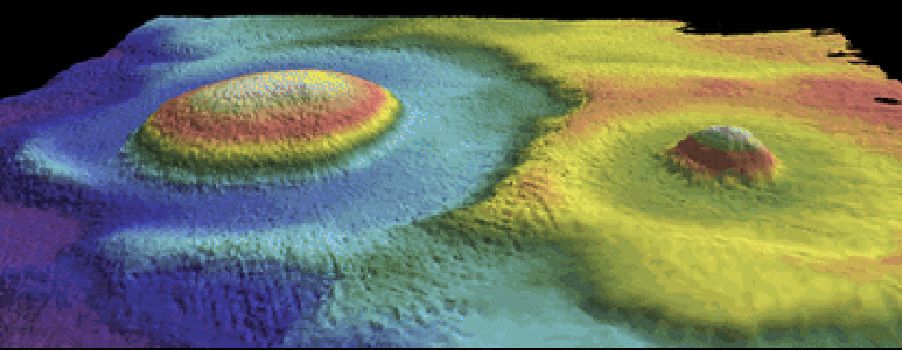
 While conducting a scientific study South of the Azores Islands, scientists at the EMEPC (Task Group for the Extension of the Portuguese Continental Shelf) discovered an underwater structure at the bottom of the Atlantic Ocean that looked very much like an impact crater. The Fried Egg, as the formation was called, might have been generated when an asteroid or a comet impacted the ocean or the ground, more than 17 million years ago, the team estimates. The researchers were initially conducting a survey aimed at mapping the seafloor in the region, the BBC News reports.
The crater, if that is indeed what the structure is, has a diameter of about six kilometers, the experts say. They estimated the age of the impact site based solely on the fact that the basaltic oceanic crust on which it was imprinted was generated around that time, and has not suffered renewals ever since.
“To be sure, we need to take samples and make a profile of the sediment layers to determine if there really is a central uplift from an impact. We need also to see all the signatures that are consistent with a high velocity impact, like glasses from melting and, of course, debris; and what are called shatter cones (shocked rocks),” EMEPC expert Dr. Frederico Dias said. The expert presented the findings today in San Francisco, at the annual meeting of the American Geophysical Union (AGU).
According to the measurements, the Fried Egg lies about 110 meters below the surrounding sea floor, which is what caught the eye of the researchers in the first place. Its base-to-top height reaches around 300 meters, and it also exhibits a central uplift, as one would expect from an impact site. This feature has a diameter of about three kilometers and is shaped like a circular dome. This was also in tune with what experts found at other asteroid or comet impact sites around the world, Dias said at the AGU conference.
The structure was first discovered in 2008, as the EMEPC group was scanning the floor using a multibeam echosounder. Intrigued by the initial find, the team returned this year, and surveyed the same area from September to November. The Fried Egg lies about 150 kilometers away from the Azores Islands, and was located at a depth of about two kilometers, the researchers announce. They also say that the lack of lava flows anywhere near the seafloor feature excludes a volcanic origin for it.