
Softpedia
 

NEWS CATEGORIES:


NEWS ARCHIVE >>
SOFTPEDIA REVIEWS >>
MEET THE EDITORS >>
Home > News > Reviews > Compared Reviews

April 2nd, 2010, 14:57 GMT · By

Antivirus: Free vs. Paid Detection

SHARE:

Adjust text size:


Antivirus battle: freebies against paid products
Enlarge picture
This article is also available in SpanishAntivirus de pago vs. gratuitos

Taking care of your system these days seems to be a less complicated task than it used to be a few years back. Now, protection against malware begins the moment you install your operating system. Windows 7 offers some basic security through Windows Defender and also provides a better solution under the shape of Microsoft Security Essentials, which is free of charge and can be installed on systems passing genuine validation. So, going with Windows 7 may be the winning hand after all.

But let’s not forget that more often than not, paid security software is the way out for most users. The reason behind this choice is given by the extended set of options such solutions come with, but also by the myth that paid antivirus comes with better detection and elimination capabilities. Although the engine is the same, there are some differences between the paid and free versions of security software of the same company with regards to the protection components offered.

In other words, the engine components available in the products are what you are paying for. Thus, free apps may have antivirus or anti-spyware capabilities, but a paying customer definitely receives increased protection for the system through a bunch of components (such as email scanner, web shield, behavioral analysis, etc.) not included in the free edition of the product. Moreover, there are currently no freebies with a EULA that extends their use to corporate environment. So, you are bound to run them for personal use only.

To blast the misconception that freeware antivirus is not equally talented at recognizing malware as paid products, we grabbed five antivirus solutions for comparison and threw them in the ring with 16,704 malware samples (trojans, backdoors, exploits, spyware, worms, etc.). The purpose of the test was not to reveal detection differences between the free and paid product from the same company, but compare a free product from one company with a paid product of another.

In the freeware corner, there was Microsoft’s Security Essentials and Avira’s AntiVir Personal (version 9, as the test was conducted before version 10 came out). Paid products included Kaspersky Anti-Virus 2010 and ESET’s NOD 32 at first. The fifth product included has a little of both worlds: avast! Pro Antivirus 5.0 brings script shield and sandbox capabilities to the table on top of the features included in the free version. However, none of the two features were relevant for our experiment, which consisted in simply feeding the malware database to each of them and checking up the amount of threats left behind.

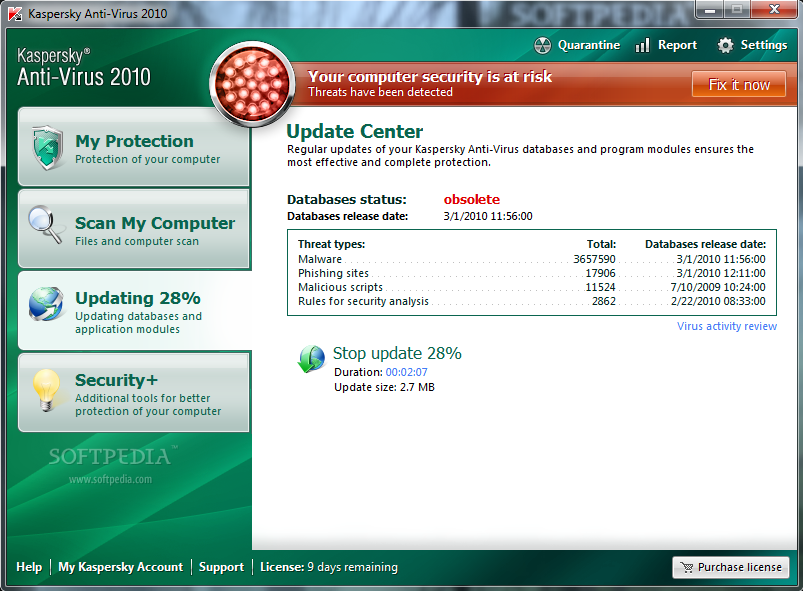
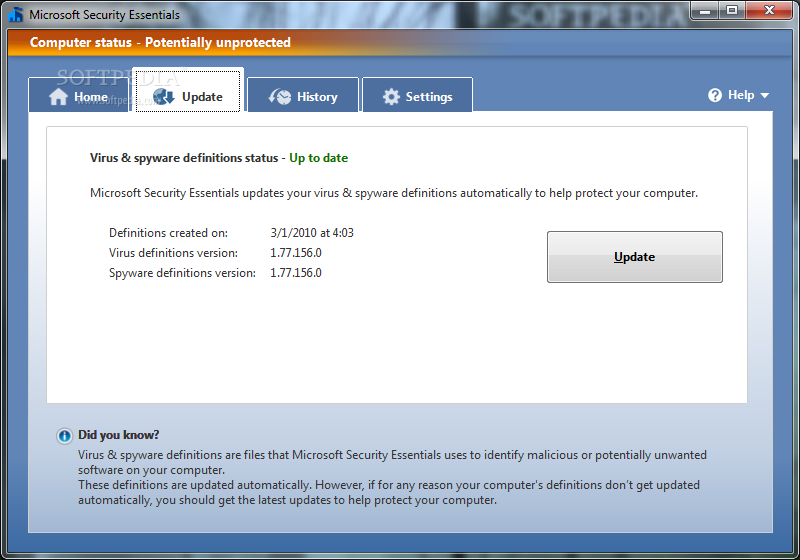
The malware database used during the tests was formed by both new and older threats, collected throughout a period of 2 years (2008 and 2009) and included vicious items like Waledac or Downadup. Prior to the experiment, all products were updated to the latest definitions available on March 1, 2010. A second test was carried out on March 22 in order to notice detection improvements with a new set of signatures.

All products benefited from the same treatment and scanned the database offline. To ease their job and quicken the entire process, we eliminated all archives, giving the threats full exposure. So, it all boiled down to the level of detection and elimination each product could offer.

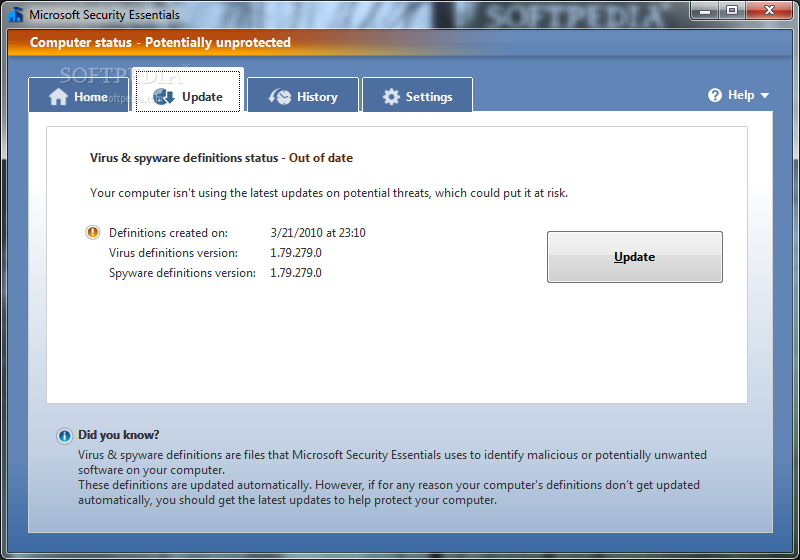
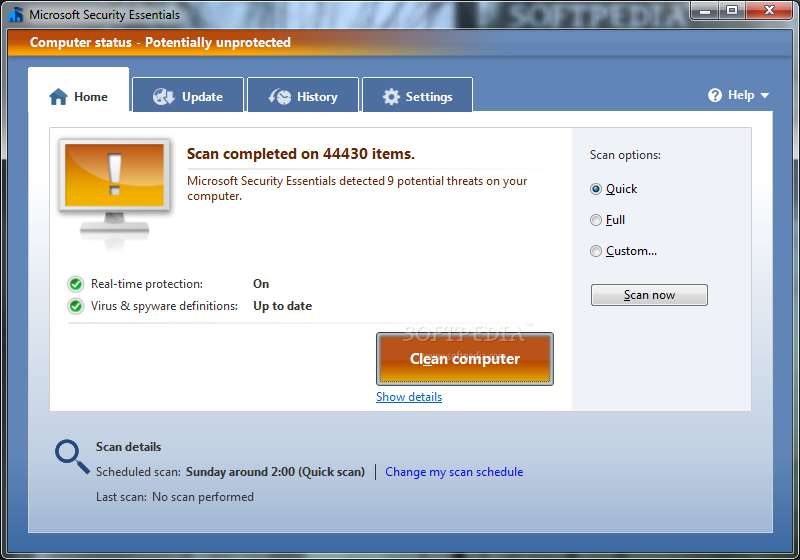
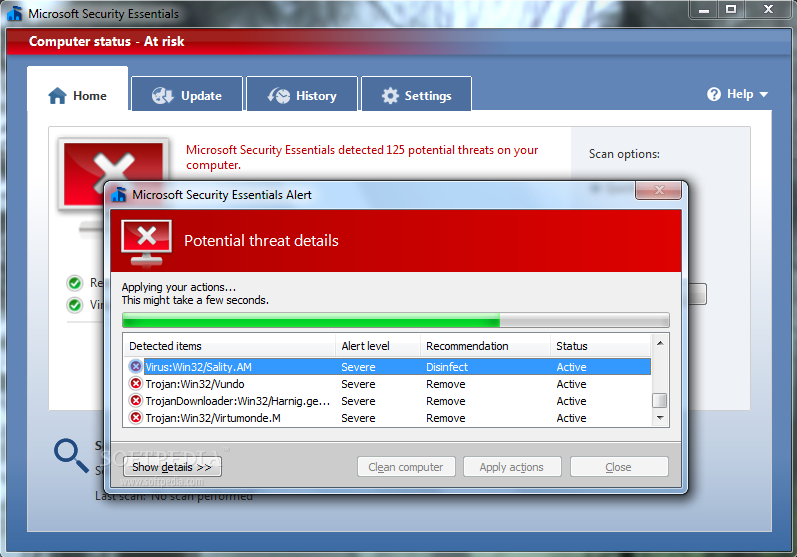
With signatures updated on 3/1/2010, the first antivirus thrown in the malware cage was Microsoft Security Essentials. We have to mention from the beginning that MSE proved to be by far the most problematic of all tested products. Despite its intuitive interface, scanning and elimination of the threats took much longer than we expected. Scan results, however, were pretty good, as MSE managed to kick out more than 14,000 samples, leaving a total of 2,662 threats available on the test system.


Enlarge picture


Enlarge picture


Enlarge picture


Enlarge picture


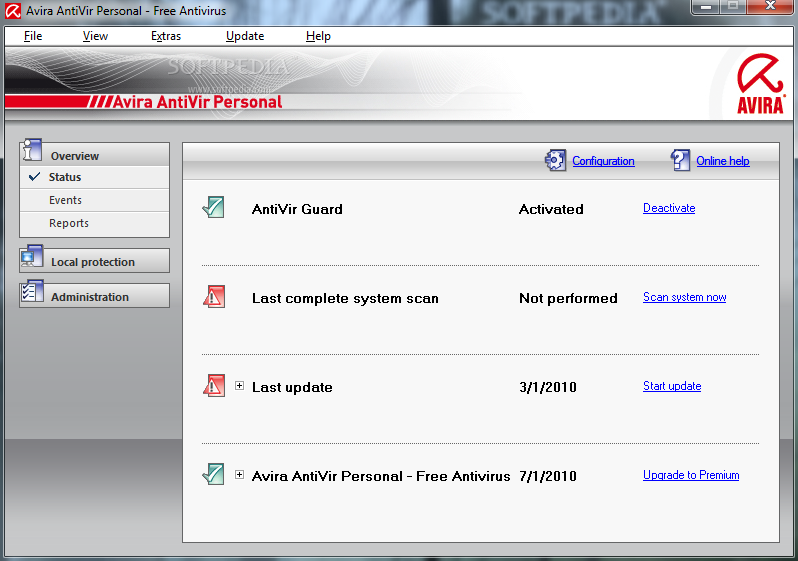
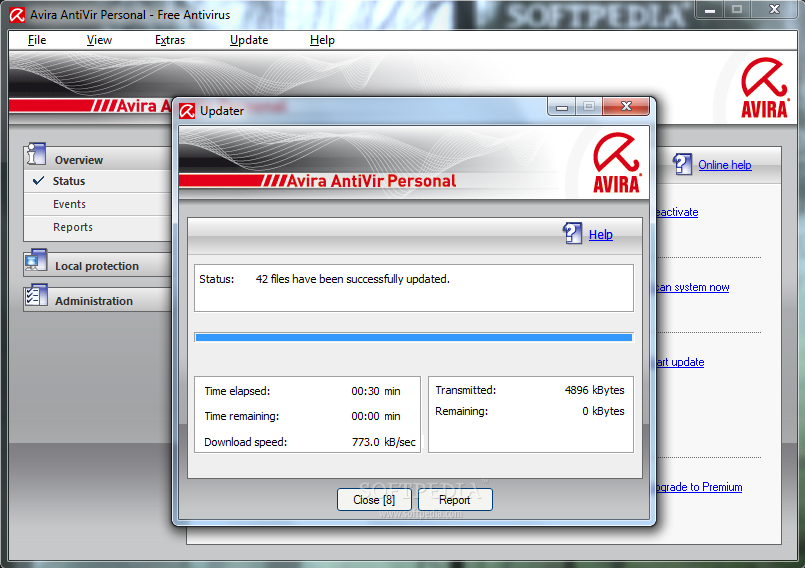
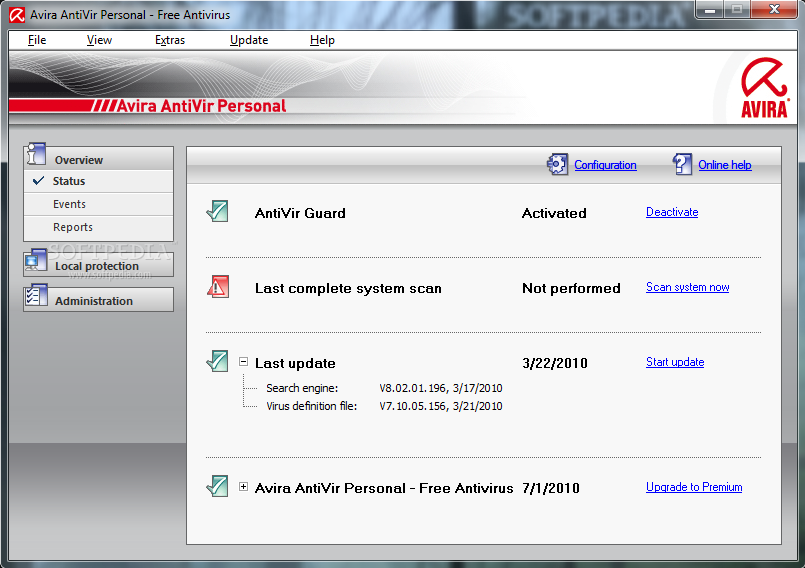
Moving to Avira AntiVir Personal 9, the experience improved exponentially, as the application took a little under one hour and a half (1h23’) to clear 15,707 samples. In this case, there was no need for multiple scans as the application took care of the threats from the first pass. Out of the total amount of threats discovered, AntiVir Personal marked 61 as suspicious and they were automatically locked to quarantine.

Both MSE and Avira AntiVir Personal offer an intuitive interface that does not require any effort to handle. Malware management upon detection can be set to an automatic action of your choice, while scan scheduling is supported by both applications. One inconvenience on Avira AntiVir Personal’s side is the advertising window that pops after certain activities have completed. As for MSE, you cannot escape joining Microsoft Spynet and avoid sending anonymous information to Microsoft’s servers about detections and actions taken.


Enlarge picture


Enlarge picture


Enlarge picture


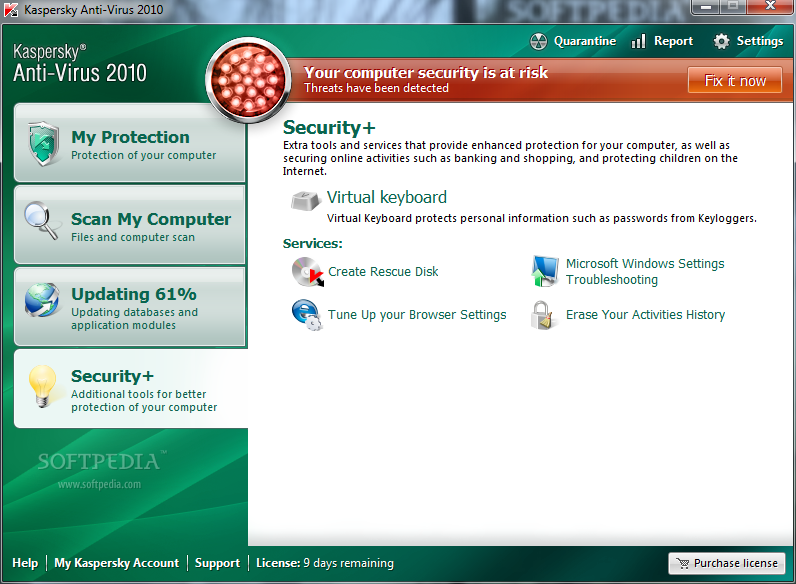
The first paid product put against the malware load was Kaspersky Anti-Virus 2010. All the options integrated in the application are the clear sign of paid quality. Besides anti-malware protection, this product can also scan incoming and outgoing mail messages for the presence of malicious code, check HTTP traffic, and verify data sent/received through IM programs. Anti-phishing, a component not seen in free security products, is included in Kaspersky Anti-Virus 2010.

Kaspersky Anti-Virus was also faced with our threat database and it did pretty well on the job, which took 3h49'23'' to complete. Although we expected outstanding results, or at least better than in the case of freeware products, there was nothing like that. The set of 16,704 samples was mutilated, leaving behind 1,523 threats.

Just like in the case of Kaspersky, ESET's NOD 32 brings a sturdier collection of options, which includes protection against threats coming through email (POP3 checking), HTTP/HTTPS, not to mention heuristics management. For testing purposes, the application was set up to maximum alert: ThreatSense parameters configured to check out all sorts of files, advanced heuristics enabled and the same goes for Anti-Stealth technology (rootkit detection).

Although we had our hopes up, with NOD 32, things did not get better either when it came to rooting the nasty stuff out of the system. On the contrary, the application managed to chop only 7631 threats in our database.


Enlarge picture


Enlarge picture


This sure looks like definite proof of inefficiency in protecting your system, but it is not exactly so because NOD 32 relies quite heavily on behavioral detection, which means that malware content had to be executed for the application to pick it up, which we did for the samples that would initiate the infection procedure immediately. To our surprise, they were promptly detected and eliminated from the damaged system. Unfortunately, because the testing process would have taken too long to complete, we chose to drop NOD 32 from the comparison experiment.

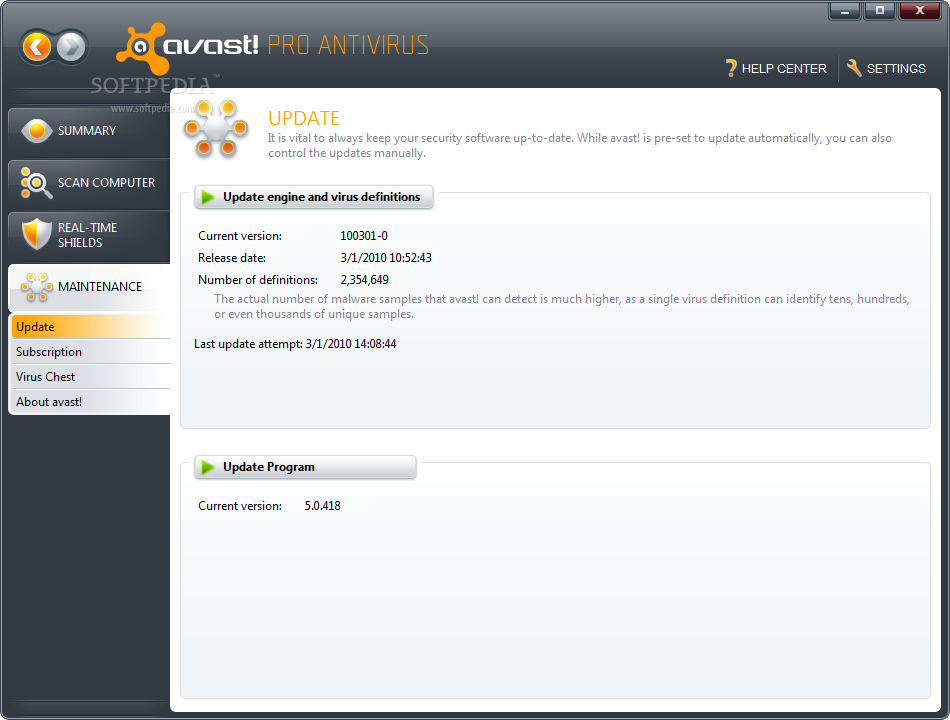
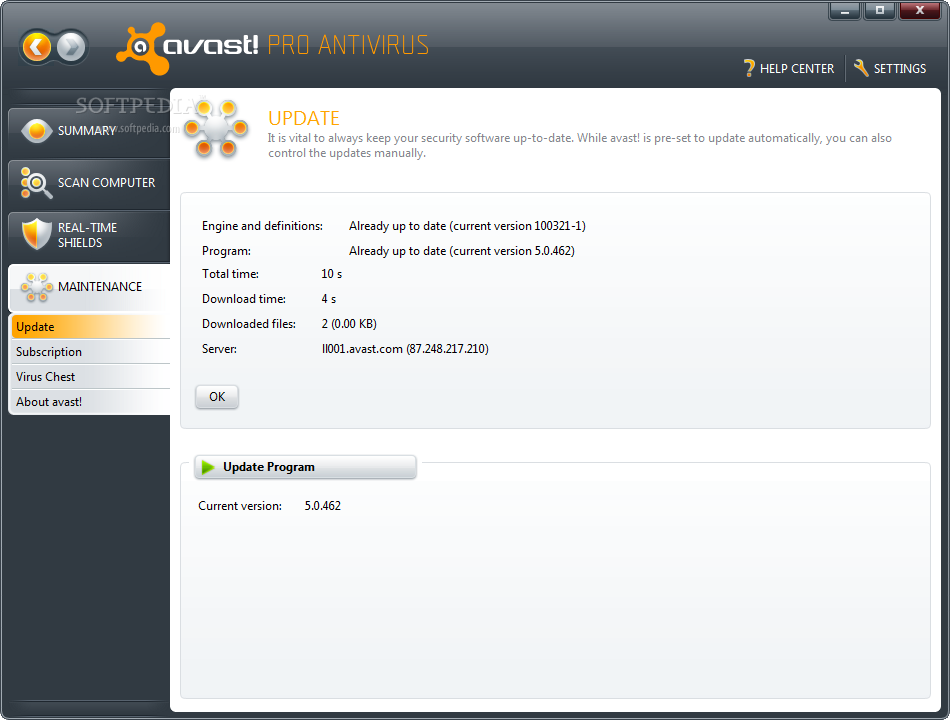
avast! 5 is kind of playing for both teams as the only limitations of the free version compared to the Pro edition are the lack of the script shield, sandbox, firewall and spam protection in the former. Despite the fact that none of these tamper with our experiment, we decided to go with avast! Pro Antivirus instead of the free edition.

With the application updated to the latest files available on March 1, we followed through with the trial. No more than 8 minutes and 13 seconds passed and the avast! lady announced the scan completed, while the Scan window agreed to the statement; we did the test again and this time glued our eyes on the process just to make sure nothing went wrong. With a processing speed of over 9MB of data per second, it couldn't have gone wrong.

The results were pretty encouraging, with a total of 15,305 dormant threats eliminated. That translates into 1,399 malicious items still present on the system. All this in a little over eight minutes.


Enlarge picture


Enlarge picture


Enlarge picture


After the first round of experimenting, the percents recorded were as follows: Avira AntiVir Personal 9 leads with 94% detection and elimination rate, followed by avast! Pro Antivirus with 91.6% and Kaspersky Anti-Virus 2010 with 91%. Falling on the last spot is Microsoft Security Essentials, with 84% detection and elimination rate. It looks like paid products stick close together, while the two freebies are a 10% gap apart.

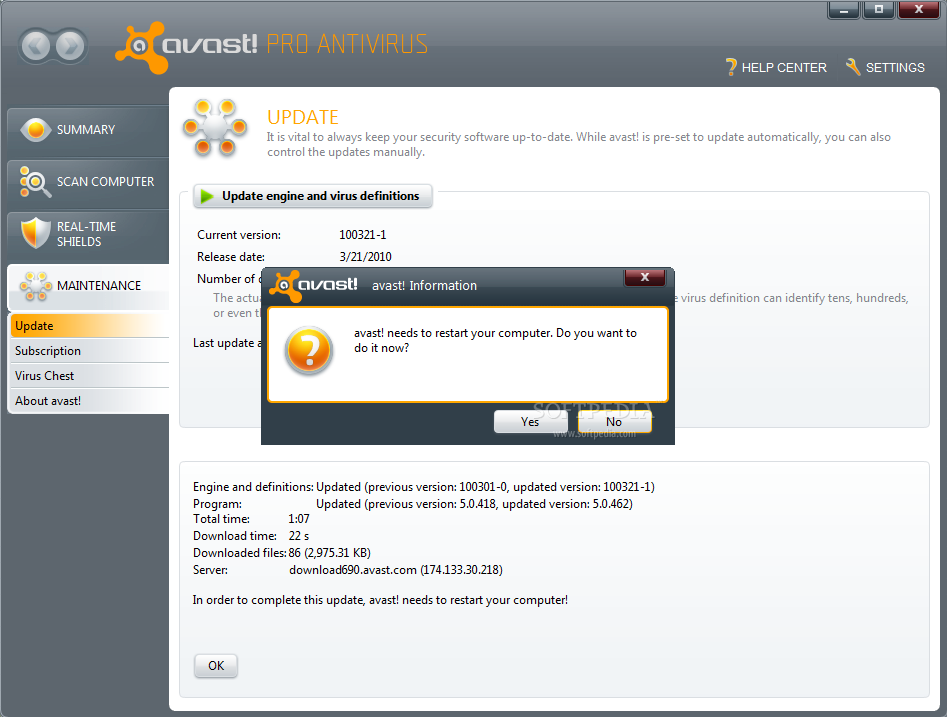
Running the second test (on March 22) on the set of malware that had not been eliminated the first time made absolutely no change in the statistics. MSE managed to nab another nine samples; Avira reduced the remaining threats by five items, leaving 992 threats behind. Kaspersky had the greatest improvement in the second test because it succeeded in eliminating another 78 items from the test database, thus increasing detection/elimination rate to 91.3%. avast! Pro Antivirus registered the smallest improvement, as it eliminated only three samples after the update.

Conclusion

Judging strictly by the detection/elimination rate on a locally stored malware database, it looks like the freebies are in control. However, paid products, despite less powerful efficiency, provide protection against threats that come your way through various distribution means, such as drive-by downloads, email, scripts, etc.

Additionally, some of them (such as Kaspersky Anti-Virus 2010) feature behavioral detection of threats, which increases its efficiency as it can bust malware not yet signed. In other words, security software developers will integrate extra tools in different versions of the same application to convince you to open your wallet.

Security products under freeware license are not without flaws either. Some of them may come with nagging pop up screens, such as Avira AntiVir Personal’s notifier, or simply do not count in protection modules designed to increase security and improve detection. In the end, choosing between a paid or free of charge antivirus depends entirely on your needs and computer usage knowledge.

The test conducted is just a mere example that freeware antivirus products have what it takes to sit at the same table with paid ones. All the products included in the experiment were chosen based on the popularity statistics on Softpedia.
TELL US WHAT YOU THINK:

67,882 hits · 54 comments · Link to this article · Print article · Send to friend · Subscribe to news

MUST-READ RELATED ARTICLES:


Combined Antivirus and Anti-Spyware Protection from Ashampoo

BitDefender Total Security 2010 (I)

Panda Cloud Antivirus Goes Final

Microsoft's Security Essentials Kit

READER COMMENTS:


Comment #1 by: tom on 02 Apr 2010, 21:01 UTC reply to this comment

That's very interesting, I only ever use the free antivirus now Avira and Avast both excellent, never had a problem, though I did when I used Mcaffee oddly enough.


Comment #2 by: Bogadan Moraru on 03 Apr 2010, 10:16 UTC reply to this comment

Can you redo the test with AVG free


Comment #3 by: Jack on 03 Apr 2010, 13:18 UTC reply to this comment

Avira AntiVir Personal 10's scanning engine is missing a lot more viruses than Avira 9 did.

The only defense working on all of the Avira 10 products is the "webguard" which is only available on the non-free (paid) versions.

Be extremely careful if you have downloaded the new Avira 10.


Comment #4 by: Pranav Singh on 06 Apr 2010, 05:29 UTC reply to this comment

Why Avira is given high rating when detection of Kaspersky is even more?
Also I would like to see if Norton Internet Security 2010 in paid and Avg antivirus in free version. These predominating paid & free versions I have used cann't be neglected so easily.
Norton & AVG standup amogst best with kaspersky.

Comment #4.1 by: tae on 22 Apr 2010, 09:05 GMT

avira rules

Comment #4.2 by: happy on 18 Aug 2010, 12:01 GMT

avira is too bad kespersky is good


Comment #5 by: Silver Emperor on 06 Apr 2010, 15:47 UTC reply to this comment

Oh yeah, Avira's on top!

There was a time that I installed four different products, avira, kaspersky, bitdefender and avg. I allowed avg to scan my newly installed system. While it was doing so, Avira kept noting down and locking up a lot of threats. Avg just kept on going without noticing anything while kaspersky and bit defender were rubbish since they're not noticing anything.

However, there's a certain bias to my findings since all of those were free versions. But I suggest more tests and products could be incorporated to give a more substantial and reliable conclusion.

Anyway, good job guys and keep it up!


Comment #6 by: baindha on 07 Apr 2010, 02:34 UTC reply to this comment

Norton Internet Security 2010 is the worst among antivirus family.


Comment #7 by: Ionut Ilascu on 07 Apr 2010, 07:30 UTC reply to this comment

We are currently working on a test that includes the free versions of Avira and AVG.


Comment #8 by: Dorian on 07 Apr 2010, 16:12 UTC reply to this comment

I have nothing personal against Pranav Singh, but Norton? I just think it wasn't considered for review because of its so-long bad reputation in being unable to catch a cold... So next time try to be a little informed on what products really stand on top of the market before just letting your fingers sin by typing things that rely just on a few rumors among people who aren't concerned about information security and
are just biased on popularity of brands and names.


Comment #9 by: Mayank on 09 Apr 2010, 05:32 UTC reply to this comment

Amazingly well written article. im using avira for past few months and its working fine, one of the fine features of avast is the presence of boot time scanning option!


Comment #10 by: Security is simple:) on 10 Apr 2010, 02:56 UTC reply to this comment

Microsoft's Security Essential package is surprisingly good. I have been using it for the past few months and it seems to be doing a decent job.

Of course, I practice safe browsing, use Firefox with a couple of addons including noscript. Add Comodo's solid firewall and you can be quite safe!

Use sandboxie if you're not sure of some software.


Comment #11 by: Baker on 11 Apr 2010, 17:58 UTC reply to this comment

Thank you so much for the great article and keep up the good work


Comment #12 by: Dipak on 15 Apr 2010, 18:20 UTC reply to this comment

I think quick heal antvirus is the best.please include it for test.


Comment #13 by: zacharia on 17 Apr 2010, 03:25 UTC reply to this comment

I had use Avira is good than any other AV. I have compare eset, and (paid version of kaspersky), Avast and Avg, only avira has detected a virus all of them failed, Avira can be updated easily via odinary dialup conection. It is show the actual size to be downloaded and time also we can save all the updated file using its Avira Antivir Updates Generator a small software which has to be installed in our pc. The said zip file can saved and can be reused.


Comment #14 by: p30n on 17 Apr 2010, 17:40 UTC reply to this comment

Kind of strange how AVG free was left out.

Comment #14.1 by: Ionut Ilascu on 19 Apr 2010, 13:02 GMT

The next comparative opposes the free versions of Avira and AVG and will be published in a couple of days.


Comment #15 by: sbily on 20 Apr 2010, 04:15 UTC reply to this comment

I think avast! is the best.


Comment #16 by: Osprey on 21 Apr 2010, 18:08 UTC reply to this comment

Great article but it would be nice if you included testing of these software products to the extent of which are the greatest system hogs and actually slowdown performance.


Comment #17 by: Jonathan Rothman on 25 Apr 2010, 13:40 UTC reply to this comment

It seems to me that what all this proves is what I read a long time ago: NO A-V program is 100% effective at protecting a computer -- paid or freeware! Period!
Given that, why pay!?
I'm entirely satisfied the new Avast. I've tried other A-Vs, but keep returning to Avast. The new Avast 5 Home is excellent; try it, you will have no reason to complain and neither will your computer!


Comment #18 by: Dipak on 14 May 2010, 02:52 UTC reply to this comment

My brother's pc was infected with lots of worm,trojans and keyloggers. I used Dr. Web cure It from my pen drive and then avast,malwarebite's antimalware, quick heal antivirus(trial) and the pc was cured. While doing so my pen drive was infected and I tried avast, avira, malwarebite's antimalware and finally kaspersky internet security but all failed to rescue it. Finally I used Quick heal antivirus(paid) and it was cured. I suggest to use avast , malwarebite's antimalware with comodo firewall together and all are free.


Comment #19 by: aftersyok on 21 May 2010, 02:51 UTC reply to this comment

I wish you guys also take into consideration of a more recently available FREEWARE antivirus which i'm also using , PANDA CLOUD ANTIVIRUS. In my humble opinion, it is worth mentioning about this antivirus since it is new, and brings about an newer concept of antivirus, which is the cloud-based apps. I personally think it is almost as good , if not better than any other mentioned freeware antivirus. You'll be amazed at just how simple the antivirus is, and how nag-free it is. Have you ever try antivirus with no virus definition upgrade notice ? and without a need to ever do one ?

Interestingly, there is a link in the MORE RELATED ARTICLES from this article, with the title
"Panda Cloud Antivirus Goes Final" .

Comment #19.1 by: Ionut Ilascu on 21 May 2010, 07:28 GMT

We are well aware of the outstanding performances of Panda Cloud Antivirus in particular (if you click on that link you'll be taken to the review of the first stable release of Cloud Antivirus) and cloud-based antivirus products in general (Immunet, PrevX); but these require Internet connection in order to show their entire potential (file analysis is done in the cloud), whereas the object of this comparative were the AV products that can offer the same protection offline, as long as the definitions are up to date.


Comment #20 by: Fahmy on 24 May 2010, 13:32 UTC reply to this comment

I think AVG 9.0 free is good and should be taken into consideration also and Eset Nod32 antivirus 4 is perfect also because it has removed autoruns and many viruses from my pc but unfortunately, it was a trial version and i actually removed it because i don't have its serial number of the free version !


Comment #21 by: Salman khan on 26 May 2010, 09:43 UTC reply to this comment

Hello friends pls tel me which one antivirus is best.
I think that new panda cloud antivirus is good but which one is best panda cloud antivirus or kaspersky antivirus pls. Tel me.


Comment #22 by: mukul on 03 Jun 2010, 07:34 UTC reply to this comment

M using kaspersky internet security since last year, m nt getting any problem with dat..
first i was using AVG free, bt it didnt hav more dan 60% detection rate...virus was playing in my PC at dat tym....kaspersky is bst in world....kasper rocks!!!!


Comment #23 by: tanay pandey on 04 Jun 2010, 04:04 UTC reply to this comment

this is a real good comparison one by softpedia it is very nice survey which was require to prove that free antivirus are also good at their work thanks softpedia


Comment #24 by: Nagaraju on 12 Jun 2010, 05:52 UTC reply to this comment

I checked the detection status of Avira and Kaspersky. I feel Avira is quite better. Avira can detect some viruses, which Kaspersky and Avast can't.


Comment #25 by: Bhupendra Dhami on 13 Jun 2010, 07:26 UTC reply to this comment

I think it is very best antiviruse in comparison with other


Comment #26 by: a. debnath on 13 Jun 2010, 17:44 UTC reply to this comment

after reading so many comments.........i want to say that avast is best free and stable anti-virus available in AV market till now..............but whenever there is an active virus operating in system it can't cure or delete it even in boot time scan(totally personal experience)and it also hanged my PC quite some times in that particular period otherwise BEST FREE AV available in market..........now coming to the paid one i just love KASPERSKY IS 2010........it is THE BEST.....no issues or problem with that...................avira is also good BUT DETECTS MORE THAN REQUIRED......................................tHANK YOU


Comment #27 by: Avinash on 22 Jun 2010, 06:33 UTC reply to this comment

Guys, is AVG Free better than MSE or am I better off using just MSE?

Comment #27.1 by: A.DEBNATH on 13 Jul 2010, 10:35 GMT

@ AVINASH
I HAVE TESTED BOTH{AVG AND MICROSOFT AV} ON MY MACHINE BUT NO ONE CAN BEAT THE NEW "AVAST 5 FREE" ANTIVIRUS IN DETECTING "TRUE" VIRUSES............U CAN JUST USE IT BLINDLY.......IT IS THE BEST AMONG FREE AV...........I KNOW THIS BECAUSE I USE IT.............


Comment #28 by: Shawn on 22 Jun 2010, 16:26 UTC reply to this comment

You need to test the freeware version of comodo security. That is the #1 anti-virus software


Comment #29 by: Nardi-albaniapirate on 01 Jul 2010, 16:23 UTC reply to this comment

I have inst. kaspersky internet security 2010 good work


Comment #30 by: GotII on 03 Jul 2010, 00:22 UTC reply to this comment

Try Commodo Antivirus and Firewall. It is free and comes with a sandbox.


Comment #31 by: Vishalx86 on 03 Jul 2010, 14:24 UTC reply to this comment

Its really good


Comment #32 by: D Acharya on 08 Jul 2010, 15:54 UTC reply to this comment

There are two problems with Kaspersky antivirus, one being that it tends to delete the affected files and the next is the support on the net in case of any query is not very user friendly.Also, they do not download the software that would heal the infected file that has been deleted or quarantined on their own.


Comment #33 by: 445cows on 14 Jul 2010, 06:17 UTC reply to this comment

I use but hate norton 360, every time it just annoys me about backup and costs too much to renew


Comment #34 by: RugbyPete on 21 Jul 2010, 08:24 UTC reply to this comment

Ive used all of the above, paid and unpaid. Im currently using paid Avast as I can get a license for nothing, however I would recommend avast free over all others as it has always caught things my other AV's havent over the years. I got a virus using Security essentials, avast found it immediately. Avast also finds things our corporate Symantec Endpoint fails to see on zero day attacks.

MSE is good, and the new beta is even better (new scan engine, network threat protection, etc.) but all of this has been in Avast already for a while.

Avast or MSE recommended. Antivir is good in the tests but ive never been happy with its removal ability, nor false positives on my machine (annoyingly deleting keygens, port scnaners etc. without asking) and the free version has large chunks missing.

Avast with a malwarebytes scan every month is more than adequate without killing resources - Avast 5 only uses 2mb system memory on my windows 7 whereas mse uses 50mb all the time. NOD32 is good, but its a paid product and can also delete my IT tools and remote control software.


Comment #35 by: MSK on 30 Jul 2010, 14:29 UTC reply to this comment

Try Panda Cloud Anti-virus once! Its simple and light, consumes least memory, and never needs update! Just important is to register (free)and always be connected to the internet as it use Cloud computing technology.


Comment #36 by: dugup on 02 Aug 2010, 02:38 UTC reply to this comment

Hear Emsisoft has the best product, I use Avast Free at present. Kaspersky has a free scanner that is updated frequently, download and then run in safe mode. I got tired of paying for protection after using Norton and then TrendMicro for years, and don't care for Security Suites anymore. It feels like paying off the neighborhood punks so they won't throw rocks at my Windows. Good to see Microsoft doing something extra to protect their product too (MSE).


Comment #37 by: Rj on 03 Aug 2010, 18:19 UTC reply to this comment

I use Avira 10 and Comodo. Although Avira 10 isn't as good as version 9, it's still one of the better AV programs around (free or paid).
I spend the past two weeks testing (free) AV programs out, and Avira, Avast & MSE were the best.
MSE had the best detection rate though slowed the system down.
Avast and Avira had similar detection rates without slowing the system down.
AVG is an utter joke that detected nothing.
Panda Cloud, Malwarebytes are also not worth putting in. Malwarebytes has far too many FP's and never detects anything serious.

As for people claiming safe surfing habits by saying they use Firefox or Safari, both of those browser are becoming less and less secure.


Comment #38 by: Akshay on 04 Aug 2010, 05:33 UTC reply to this comment

Don't just go by opinion given above. If you really want to know capabilities of all anti-virus products, please go through scientific analysis reports only. Many software testing laboratories conduct these tests and provide rankings to the anti-virus products. I want you to go through following test reports. These test reports are very clear and easy to understand. They have explained clear methodology for conducting their tests. After reading that reports you will understand that how many parameters have to be considered for selecting perfect anti-virus product for your computer. Free or paid product is not just a issue. If anti-virus is good enough then consumer will pay for it. Actual quality of any product can't be decided by one or two parameters. So be wise and not just follow others opinions, discover the good things and make your computer safe.

Testing Laboratories are as follows:

1. Virus Bulletin (VB 100 Award for Anti-virus Products).
2. ICSA testing Laboratories (ICSA certification for Anti-virus Products).
3. AV-Comparatives Laboratories (AV-Comparative Certification Authority).

If you don't know about these things then search on the 'Google' for the same.

Thank You for considering this.

Regards,

Akshay.


Comment #39 by: CyberWolf64 on 11 Aug 2010, 18:10 UTC reply to this comment

Well, Avast may have tested well, BUT, I still have BAD memories of an older version of that program when after install it literally locked out ALL removable media in machine. I KNEW it was culprit as when it was removed everything was normal again. I am EXTREMELY leery of trying it again because of this.

Comment #39.1 by: Sayer on 13 Aug 2010, 16:05 GMT

Eset nod32 is the only antivirus on the planet to detect every in the wild virus. You do not have to take my word for this . It's Proactive defense is also among the very best.

http://www.eset.com/home/compare-eset-to-competition

http://www.eset.com/home/compare-eset-to-competition/certifications

Nod32 treats a virus like a bug if it moves it crushes it, the world's fastest and most effective antivirus protection.


Certifications :

ICSA Labs
Virus Bulletin
AV-Comparatives
West Coast Labs
OPSWAT
CheckVir

It is also one of the only AV companies that submits to all major independent virus testing labs.

Have a nice day


Comment #40 by: aimen on 17 Aug 2010, 15:30 UTC reply to this comment

so which one is best ?

Comment #40.1 by: xx on 21 Aug 2010, 06:52 GMT

yes est rules


Comment #41 by: Wastu on 24 Aug 2010, 23:22 UTC reply to this comment

so what is the best product Antivirus software ????

Comment #41.1 by: Algernon on 29 Aug 2010, 07:59 GMT

COMODO :-)


Comment #42 by: f4rr3z on 27 Aug 2010, 18:56 UTC reply to this comment

avira is the most ridicolous antivirus...
a true antivirus is kaspersky...!!


Comment #43 by: MRw0rmX on 13 Sep 2010, 12:42 UTC reply to this comment

MSE 4EVER

KASPERSKY IS GOOD TO. THE REST SUCKS A LOT :)

Comment #43.1 by: Jeeva on 18 Sep 2010, 11:56 GMT

Yes Kaspersky is too good...because before few months my system were infected in virus via pen drive and i installing AVG....but cannot founding the virusus....finally i am installed Kaspersky Internet Security.....more virusus founding and removed.....So you will decide which is best.....Kaspersky is Very good product................


Comment #44 by: Rajat on 14 Dec 2011, 01:48 UTC reply to this comment

The Best Antivirus is Quick Heal


Comment #45 by: geek-E on 20 Jan 2012, 17:30 UTC reply to this comment

In the last year I have fixed 183 infected windows computers. 74 had Microsoft Security Essentials, 61 had AVG, 29 had Norton, 6 BitDefender, 5 Panda, 4 Avast, 3 Kaspersky, and 1 NOD32. *NONE* had Linux, which I used to fix them all. Just thought you should know.

Copyright © 2001-2012 Softpedia. Contact/Tip us at

WindowsGamesDriversMacLinuxScriptsMobileHandheldNews

SUBMIT PROGRAM   |   ADVERTISE   |   GET HELP   |   SEND US FEEDBACK   |   RSS FEEDS   |   UPDATE YOUR SOFTWARE   |   ROMANIAN FORUM