 14 DAY TRIAL //
 A new scientific study conducted in the Antarctic has revealed that numerous species of viruses exist in the continent's lakes. Some of the new organisms were previously unknown, and researchers say that they are surprised to have discovered such large diversity in a seemingly-harsh place. The thing about Antarctic lakes is that they are unfrozen for about three months each year, and they also hold only very limited amounts of nutrients. Therefore, why something would choose to live there is a mystery.
Very few actual animals exist in these lakes, the science team reports, quoted by LiveScience. The waters are mostly populated by microorganisms, including, next to viruses, algae, bacteria, and protozoans. It is now believed that the microbes play a huge role in controlling the amounts of other nutrients in the lakes. The research team, made up of experts from the Spanish Research Council (SRC), hypothesizes that they ended up with having such important roles because they have no natural predators in this environment.
A modern-day genome sequencing technology is finally allowing researchers to study these microbes without having to grow them in the lab. Until now, it has been notoriously hard to look at Antarctic microorganisms, precisely because they need very specific conditions if they are to grow. “We are just starting to uncover the world of viruses, and this is changing the way we think about viruses and the role they play in microbial ecosystems,” SRC researcher Antonio Alcami says. A virus is defined as a molecule of DNA supported by a protective coating, which allows it to resist attacks.
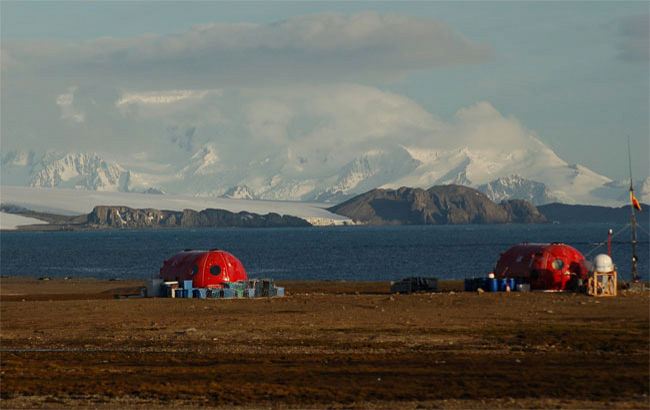
Antarctica's Lake Limnopolar was the target of the new investigation. In the water samples the team collected, scientists found as much as 10,000 microbe species, of which some were identified for the first time. All of the species discovered can be classified into just 12 families, the experts reveal, of which some may be entirely new to science. It has also been discovered that the microbe populations vary considerably in size and composition depending on the season. “It looks like a completely different lake in summer,” Alcami reveals. Details of the study appear in the November 6 issue of the top journal Science.