 14 DAY TRIAL //
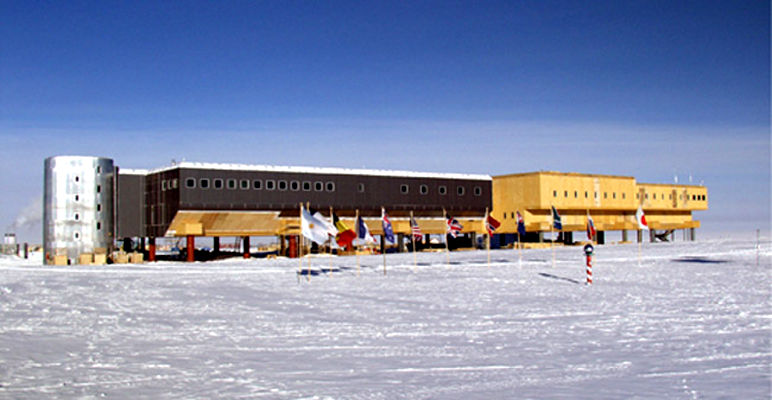
 While many critics of global warming continue to argue that the phenomenon is not real, scientific data again show that tragic truth. According to the datasets released by the Amundsen-Scott South Pole Station, in Antarctica, the southern continent experienced its highest annual temperature mean in more than 53 years. Since 1957, when scientists first began keeping tabs on temperature averages at the location, there have been no warmer years than the last one. The average temperature level in Antarctica for 2009 was minus 54.2 degrees Fahrenheit (minus 47.9 degrees Celsius), LiveScience reports.
The second-warmest year on record was found to be 2002, when the record high was at around minus 54 degrees Fahrenheit (minus 48 degrees Celsius), explains South Pole Station senior meteorologist Tim Markle. The results of this investigation are in tune with data collected by NASA Earth-observing spacecraft, which shows that 2009 was the second-warmest year on record for Earth. The global surface temperatures increased as well, scientists announced, not just the ones in the more fragile and delicate polar environments. The second-warmest year overall was 2005.
According to climate scientists, over the past two decades there have been two consecutive winters during which the temperature did not drop below the minus 100 degrees Fahrenheit (minus 73 degrees Celsius) barrier. This is a measure value that researchers used to analyze the amount of warming the continent underwent in a particular year, or over half a decade. In 2007, for example, researchers say that temperatures plunged below minus 100 Fahrenheit for as little as a single minute. The event took place on September 2, and was not repeated throughout that year.
In 2009, temperatures dropped to minus 99.9 F (minus 73.3 C) and minus 98.0 F (minus 72.2 C), respectively, but the threshold was also not reached. What amazed researchers was the fact that April 2010 saw an unprecedented dip in temperatures. The 100 degrees Fahrenheit limit was reached for about 22 minutes, which puzzled climatologists. “Again, not really all that long. However, it was certainly the coldest temperature since Sept. 2, 2007, and a long enough duration for one group of Polies to achieve membership status into the 300 Club,” Markle adds. To enter the 300 Club, one needs to take a bath in an incredibly-hot sauna, and then run to the South Pole wearing mostly their boots.