 14 DAY TRIAL //
 Over the billions of years they had at their disposal, plants have evolved into a myriad of types, classes and families, each of them featuring their own unique traits. One of the most marked aspects that helps distinguish between various types of vegetation is the shape of their leaves. Throughout nature, we can observe a huge variety of shapes and sizes for leaves. These structures help the plant survive, convey information about its health and threat level, and can also play other roles such as water conservation. Now, a scientist says that all the shapes of all the leaves in the world may be contained in a simple algorithm, Technology Review reports.
“Leaves have evolved over millions of years to optimize light collection, transport of nutrients to and from the plant body, and mechanical stability against natural stresses,” explains physicist David Young. He is based at the US Department of Energy's (DOE) Lawrence Livermore National Laboratory (LLNL). Botanists have for a long time hypothesized that the mechanisms driving leaf growth, and therefore their shape, must be genetic. But analyses immediately highlighted a host of other factors that are at work in influencing the plant as well.
These external influences include nutrition, sunlight and exposure to predators. In addition, the genetics-only theory is further hindered by heteroblasty, a process in which the same plant grows leaves of various shapes. “My objective is to explain not only the range of leaf shapes found in the higher plants, but also the large variations in shape seen in leaves on closely related plants,” Young says of the algorithm he is now proposing. According to the expert, the calculations reproduce most of the leaf types that appear in nature. Details of his work appear in a paper published online in the journal arXiv.
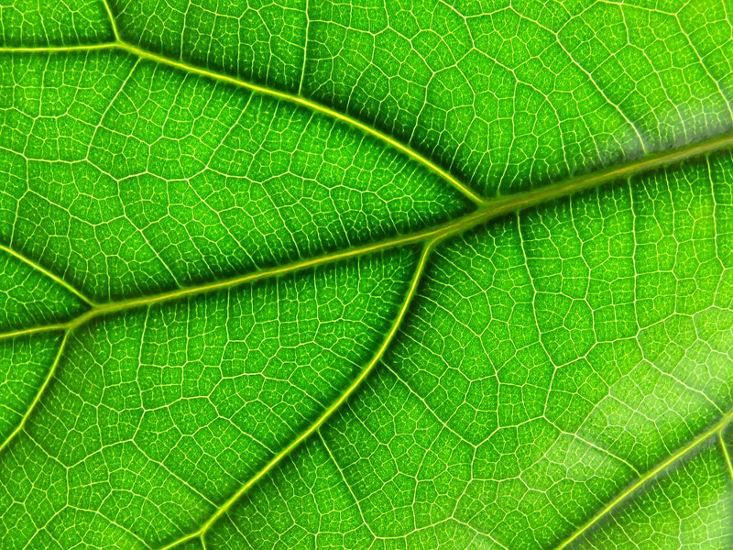
The scientist proposed that the main influence on the final shape of the leaf is the position of its veins, the transport conduits for nutrients and water. Once the positions of these structures are established, the leaf grows two-dimensionally (2D) around them. Using this approach, the expert says, the final shape of the leaf eventually becomes nothing more than an accidental consequence of vein distribution. Counter-intuitively, varying only these simple parameters, Young's algorithm becomes capable of reproducing a surprisingly-vast variety of naturally-occurring leaf shapes.