 14 DAY TRIAL //
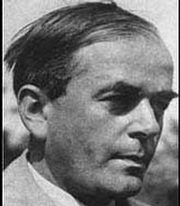
 Albert Speer was the architect who served Adolf Hitler with devotion and efficiency, keeping the German war machine functioning under the onslaught of the Allied blockade and bombardment.
Albert Speer, the son of an architect, was born in Mannheim, Germany 19 March 1905. He grew up in the family residence in the university town of Heidelberg under rather emotionally cold conditions. Albert Speer studied at the technical schools in Karlsruhe, Munich, and Berlin, and acquired an architectural license in 1927.
After hearing Hitler speak at a Berlin rally in late 1930, he enthusiastically joined the Nazi Party in January 1931. After joining the NSDAP, Speer was offered a succession of commissions for the party. He felt fortunate to have been given this opportunity to build and create in a world full of unemployed.
His talent and ability were quickly recognized and soon he came to the attention of the leader of the party, Adolf Hitler. In his autobiography, Albert Speer explained why he joined the National Socialist German Workers Party in 1932.
?Had Hitler announced, before 1933, that a few years later he would burn down Jewish synagogues, involve Germany in a war, and kill Jews and his political opponents, he would at one blow have lost me and probably most of the adherents he won after 1930. In making this decision to join the accursed party, I had for the first time denied my own past, my upper-middle-class origins, and my previous environment. My inclination to be relieved of having to think, particularly about unpleasant facts, helped to sway the balance. In this, I did not differ from millions of others. Such mental slackness above all facilitated, established, and finally assured the success of the National Socialist system. And I thought that by paying my party dues of a few marks a month I had settled with my political obligations."
It was only after Fritz Todt died in a plane crash, in 1942, that Hitler asked Speer to take over as Reichsminister for Armaments. It was clearly a smart decision on Hitler's part, as Speer was an organizer of extraordinary talent and efficiency. Speer's administrative finesse and dedication to work resulted in a dramatic boost in Germany's production levels.
This is showed by the fact that armament production reached its peak in 1944, despite heavy allied bombing. It is estimated that Speer's efforts allowed the Germans to prolong the war by at least a year. Even though Speer realized, in the early 1943, that the war was inevitably lost, he continued to rally the industry.
As the Allies closed in around Germany, Hitler gave the order that the Reich should be razed so that the "conquerors" would gain no benefit from German industry. Speer realized that this order, if it was carried out, would devastate any chance of recovery for the German people after the war. In the final months of the war, Speer expended a huge effort in seeking to counter Hitler's order. He most likely put his life in danger in seeking to oppose Hitler's scorched-earth policy and was somewhat successful in protecting industry and infrastructure within the country.
Albert Speer, as Minister of Armaments, was a strong supporter of the rocket program headed by Wernher von Braun. He wrote about the testing of the Waterfall rocket in his autobiography, Inside the Third Reich.
?On June 13, 1942, ..., Feld Marshal Milch, Admiral Witzell and General Fromm, flew to Peenemunde with me to witness the first firing of a remote-controlled rocket. Wisps of vapour showed that the fuel tanks were being filled. At the predetermined second, at first with a faltering motion, but then with the roar of an unleashed giant, the rocket rose slowly from its pad, seemed to stand upon its jet of flame for the fraction of a second, then vanished with a howl into the low clouds. Wernher von Braun was beaming. For my part, I was thunderstruck at this technical miracle, at its precision and at the way it seemed to abolish the laws of gravity, so that thirteen tons could be hurtled into the air without any mechanical guidance. Approximately twenty-five feet long, the Waterfall rocket was capable of carrying approximately six hundred and sixty pounds of explosives along a directional beam up to an altitude of fifty thousand feet."
As he worked closely with Karl Doenitz, Speer was able to announce that Germany was producing 42 U-boats a month by 1945. He also recorded in his autobiography that the Germans were involved in several secret projects during the Second World War. During the war, Speer clashed numerous times with Heinrich Himmler arguing that concentration camp factories were inefficient and preferred using paid labour in occupied countries.
He later claimed that he saved lives because of this policy, but his opponents pointed out that this policy had more to do with efficiency than morality. Over the years, the 'Speer Ministry', as it was called, ended up employing 28 million workers, 6 million of them foreign, and about 60,000 of them concentration camp prisoners. The treatment and conditions many of the foreign workers had to endure was horrifying. Speer visited one of the work camps and was shaken by what he saw. It was not enough, however, to persuade him to cease his work for the Nazis.
At the end of the Second World War, Speer was arrested and was charged with using slave labour in his production programmes. Speer pleaded guilty and was sentenced to twenty five years in prison. Speer lied at the trial. There is no question about that fact. If he was to tell the truth, he would, most likely, have been hanged.
From 1946 to 1966, while serving the prison sentenced by the Nuremberg War Crimes tribunal, Albert Speer wrote down 1,200 manuscript pages of personal memoirs. Titled Erinnerungen ("Recollections") upon their 1969 publication in German, Speer's critically acclaimed personal history was translated into English and published one year later as Inside the Third Reich.
Long after their initial publication, Speer's memoirs continue to provide one of the most detailed and fascinating portrays of life within Hitler's proteges circle, the rise and fall of the third German empire, and of Hitler himself.
To understand Albert Speer and his actions during the period of the Third Reich, and indeed beyond it, we must consider his relationship with Hitler. Once this is completed, we can deal better with the philosophical issues at stake. Few men could have been closer to Hitler than Speer. Speer claims he was probably one of the nearest things that Hitler had to a friend. The relationship was certainly mutually beneficial.
Eventually they were, in a sense, interdependent. Hitler needed Speer's work, both as an architect, and an organizer, and Speer needed to continue to be "in Hitler's favours", if he was not to descend after his meteoric rise. "After all, I was entirely dependent on Hitler's whim for achieving my ambitions."
Speer was set to be the world's greatest architect who would have designed the greatest city that the planet had ever seen. The task Speer had been given - the rebuilding of Berlin - exceeded anything imagined until then in city-planning. He owed this opportunity to Hitler, who pulled him out from obscurity.
"For the commission to do a great building, I would have sold my soul like Faust. Now I had found my Mephistopheles. He seemed no less engaging than Goethe's," Albert Speer.
The great architect and organizer Albert Speer passed away in 1981.