
Softpedia
 

NEWS CATEGORIES:


NEWS ARCHIVE >>
SOFTPEDIA REVIEWS >>
MEET THE EDITORS >>
TRENDING TODAY
Home > News > Technology and Gadgets > Motherboards

March 4th, 2010, 09:01 GMT · By

ASUS Motherboard Reduces Radiation by 50%

SHARE:

Adjust text size:

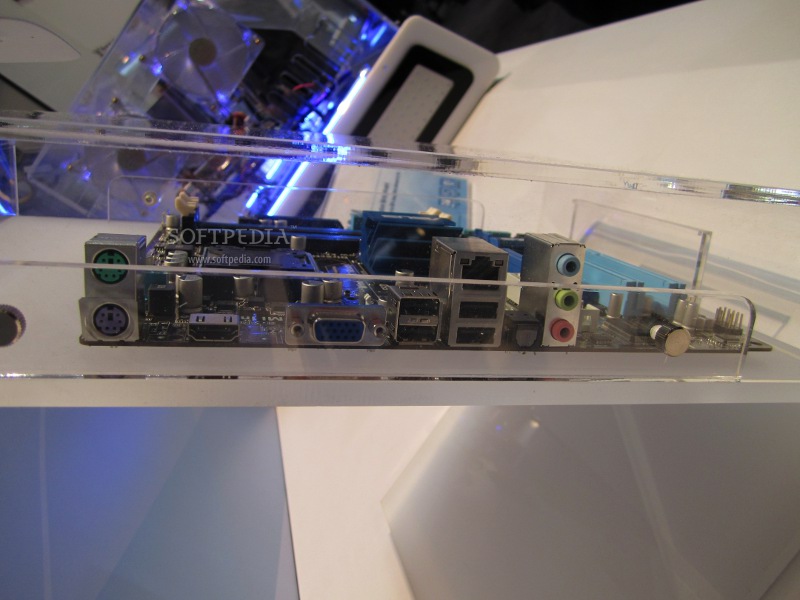
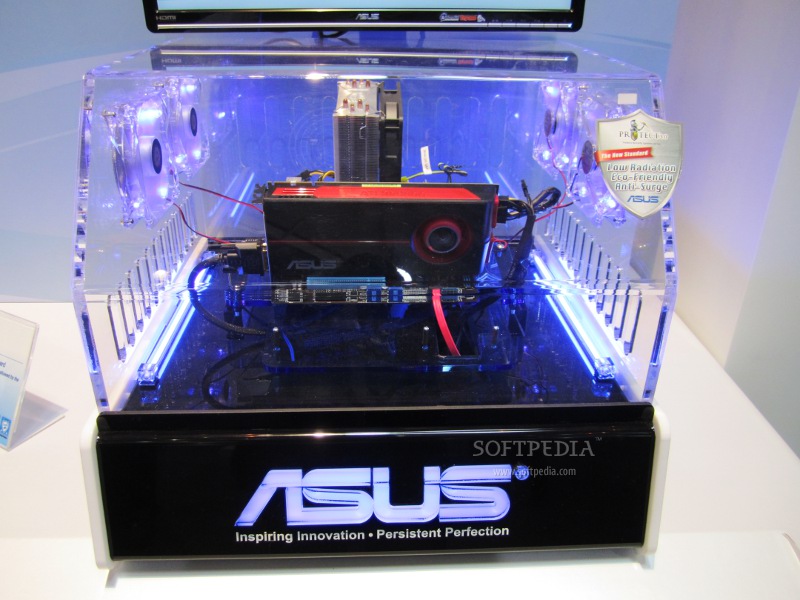
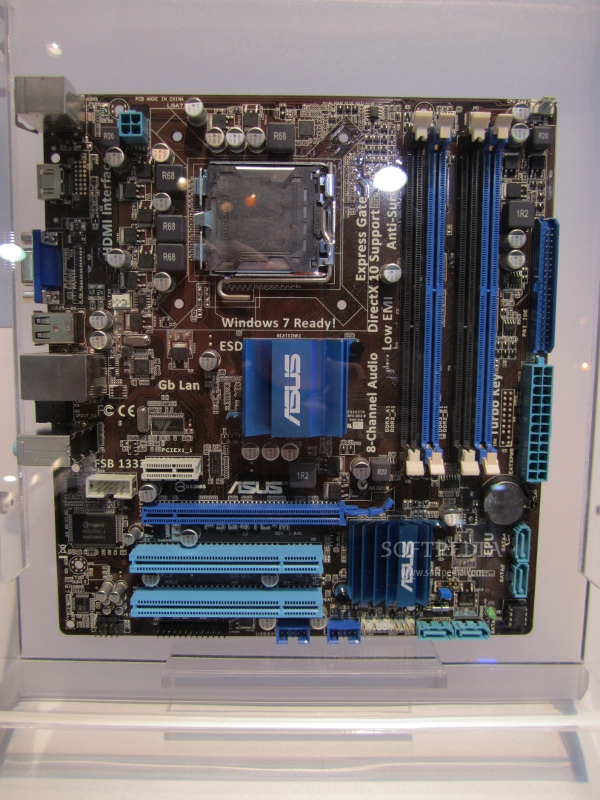
ASUS demonstrates low-radiation motherboard at CeBIT 2010
Enlarge picture
ASUS definitely didn't hold back when it set up its CeBIT 2010 exhibition, having brought along a variety of devices such as business and multimedia laptops, ROG motherboards, an e-reader and notebooks with NVIDIA Optimus, among other things. Now that the portability and performance needs of consumers are taken care of, the company is also displaying a mainboard specifically optimized for low energy use and safe operational conditions. Known as the P5G41C-M, the device is described as the world's lowest radiation motherboard and promises to protect the Earth, the system and the user.

The motherboard is based on the Intel G41 + ICH7 chipset, has one PCI Express x16 slot for graphics and four DDR3 memory slots. The product also features Gb LAN, 8-channel audio and full support for Windows 7. Nevertheless, as it has already been mentioned, the main strength of this platform is its ability to cut down energy use and radiation.

This ability is provided by the ASUS Green Design that uses the ASUS protect 3.0 technology. Through the use of an eco-friendly EPU (energy processing unit), the system's power requirements are automatically monitored and adjusted. This allows power to be used with maximum efficiency.

According to ASUS, studies have demonstrated that ten million EPU-enabled motherboards can reduce annual emissions of CO2 by 207,430 tons. This is the equivalent of the total carbon emissions that Australia produces in a year. Not only that, but the Protect 3.0 also includes Anti-Surge and EMI features, which protect both systems and their users, reducing the total radiation by up to 50% and preventing system damage as a consequence of electrical surges.

To demonstrate the functionality and high efficiency of the P5G41C-M motherboard, ASUS has set up a configuration that uses the Intel Core 2 Quad Q9450 processor, 4GB (2GB x 2) OCZ DDR3 memory at 1333MHz and an ASUS EAH5850 graphics card. The system uses the Cooler Master hyper 212 Plus CPU cooler and draws energy from a 1000W PSU from SilverStone.

The board can be found listed at a price of $66.99.

ASUS demonstrates low-radiation motherboard at CeBIT 2010
Enlarge picture
ASUS demonstrates low-radiation motherboard at CeBIT 2010
Enlarge picture


Live report by Traian Teglet from CeBIT 2010 in Hanover, Germany.


2,609 hits · 2 comments
Link to this article · Print article · Send to friend

MUST-READ RELATED ARTICLES:


ASUS Adds Turbo 33-Enabled Ultra-Slim Business Laptops

ASRock at CeBIT 2010: AMD 890GX Motherboards with USB 3.0

XFX Joins 4GB HD 5970 Bandwagon

NVIDIA Yanks GPU out of Optimus System, PC Still Runs

MSI Demoes Its New 3D AiO at CeBIT

READER COMMENTS:


Comment #1 by: Chris M on 11 Mar 2010, 15:31 UTC reply to this comment

Now What?!?

Green Motherboards—Protect 3.0
Motherboards are the heart of the system, and ASUS Green Design has come up with a new standard in motherboard protection with ASUS Protect 3.0. Protect 3.0’s EMI and Anti-Surge features protect users and their systems—reducing radiation exposure by up to 50 percent and preventing electrical surges from damaging the system.


What is the Radiation Exposure aspect of this?

Are you saying a motherboard produces a significant release of radiation (x, alpha, beta, gamma) during normal operation?

Or are we speaking of radiated heat and someone didnt get the translation correct?

Can you just make a claim and stick a green logo on anything these days and charge more in the name of mother earth?

Even if a MB somehow produced radiation , can it even escape a computer case if it is at ultra low levels which i would suspect if at all proven.


Comment #2 by: Hu on 12 Jul 2010, 14:42 UTC reply to this comment

"Are you saying a motherboard produces a significant release of radiation (x, alpha, beta, gamma) during normal operation?"

Hu man, you seem to mix different things. The radiations you're talking about are ionizing radiations, those that transform the matter by ionization. The article is talking about non-ionizing "rays", commonly named... electromagnetic waves. And it happens the vector of those radiations is just a photon.

Maybe you think also that only devices with an antenna can radiate EM waves. That's not the case and by the way, an antenna can just be anything, like a simple wire, which is actually used in some case (long waves antenna). By the way, antennas are just wires that are somehow optimized in size and shape for a better result at the frequency they will be used. Any electronic component radiates and generate an EM field in its neighborhood. Just most of the time this EMF is insignificant at "normal" distance. Note that the "strength" of an EMF is divided by 4 each time you double the distance the source and the "receiver". So two important factors are: radiated initial intensity and distance to source.

CPU, GPU, and other MoBo components happen to work with high frequency currents, and sometime high intensity, as demonstrated by the need to cool them and the size of the power supply. CPU that works at 2 GHz, meaning their clock is a square signal at 2 GHz, also radiates at this frequency, and by the mean of "frequency products" radiates at other frequencies, but at a lower level (heterodyning and harmonics), GPU are like CPU, RAM also radiates.

Understanding EMF means understanding how an emitter works. You may discover if you search that to produce an EMF, you need to have an oscillator to produce a non-radiated signal, and then to radiate this signal. So the question is: do we have those components in a PC? Yes we have them.

A clock is just an oscillator, pure and simple. A low power one. This clock will drive all the functions on the MoBo, meaning this low power signal can potentially by amplified.

Can we radiate this signal off the MoBo? Yes we can. Specially at those frequencies (2 GHz), anything becomes an antenna: a wire, a printed board, a metallic surface... name it.

Can this radiated signal reach the outside of the Desktop or Laptop? Depends, but yes, at least partially in the best case, and totally in the worth. The metallic casing will acts somehow like a Faraday case, but not a perfect one. EMF will be re-radiated by any connection (power cord, network cable, monitor cable, etc). Sometimes basic "filters" are found on the cables to avoid those re-radiation (ferrite cores). If you chose to have a transparent casing, then you're out of luck... no protection.

The problem is to understand whether the EMF are significant or not, and I'm also interested in this aspect. And in spite I can understand what is a radio-emitter and receiver (I've built some), I don't have the answer.

Copyright © 2001-2013 Softpedia. Contact/Tip us at

WindowsGamesDriversMacLinuxScriptsMobileHandheldNews

SUBMIT PROGRAM   |   ADVERTISE   |   GET HELP   |   SEND US FEEDBACK   |   RSS FEEDS   |   UPDATE YOUR SOFTWARE   |   ROMANIAN FORUM