
Softpedia
 

NEWS CATEGORIES:


NEWS ARCHIVE >>
SOFTPEDIA REVIEWS >>
MEET THE EDITORS >>
TRENDING TODAY
Home > News > Science > Space

February 25th, 2013, 15:11 GMT · By

A Star as Old as the Universe, or Older, in Our Cosmic Back Yard

SHARE:

Adjust text size:

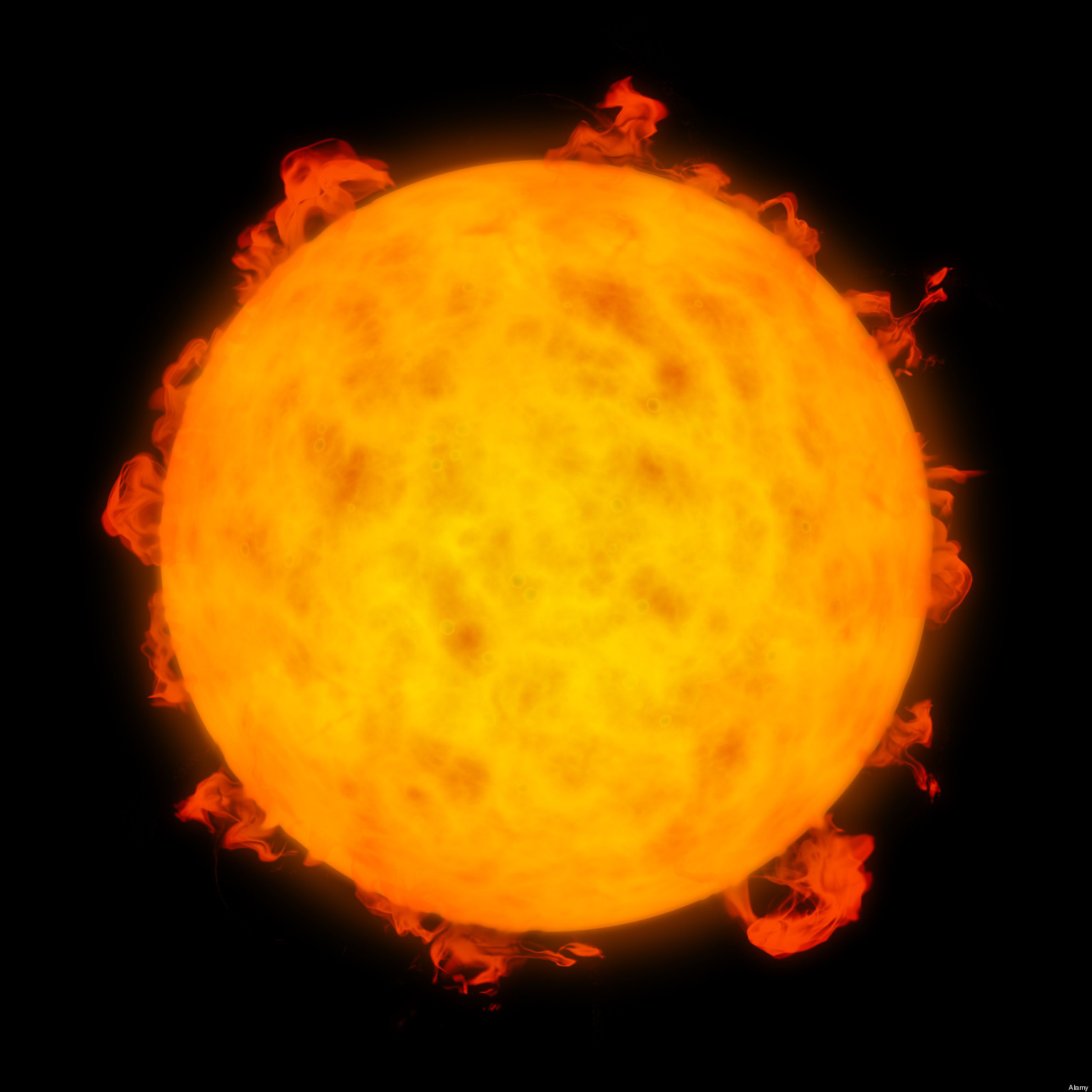
Stars like HD 140283 are as old as the universe
Enlarge picture
Astronomers generally look far outwards into the cosmos, using increasingly powerful complex tools to peek into the early days of our universe. But they don't always need to look too far, ancient relics of days long past linger in our cosmic backyard.

A team of astronomers has identified a nearby star that is almost as old as the universe, HD 140283 is only 190 light-years away and is possibly one of the oldest stars discovered so far.

In fact, astronomers calculated that the age of the star is 14.46 billion years, which is significantly older than our current best estimate for the age of the universe, 13.77 billion years.

There is a margin of error of 800 million years on the star's age, which puts it within the boundaries of the Big Bang, just barely. HD 140283 can't be younger than 13.66 billion years, if the calculations are correct.

The star is deficient in metals, a trademark of the early stars. Heavier elements were created in supernova explosions, meaning they weren't there when the first stars were formed. This particular old star has only 1 percent the iron content of our sun, for example.

Stars like HD 140283 are important because they provide a constraint on the age of the universe, independent of what the current popular theory may be.

The Big Bang theory is the best we've got to explain the origins of the universe, but it's certainly not going to be last.

Measuring the age of a star puts limits on how young the universe can be, regardless of the theory used, the universe couldn't be 12 billion years old, for example, since, as best as we can tell, stars existed before that, stars which still shine today.
FILED UNDER:
big bang
star
universe


967 hits · 1 comment
Link to this article · Print article · Send to friend

MUST-READ RELATED ARTICLES:


Which Came First, the Chicken or the Egg? The Biggest Question of Our Time Answered - Video

Quantum Physics, the Universe's Ultimate Troll, Ruins Absolute Zero, Negative Temperatures Achieved

First “Alien Earth” Is to Be Found in 2013, Scientists Say

Largest Structure in the Universe Threatens the Laws of Physics

NASA Reveals Swift's Most Stunning Photos - Gallery

READER COMMENTS:


Comment #1 by: Cyclops on 25 Feb 2013, 18:14 UTC reply to this comment

By definition,the star cannot be older than the 'Big Bang'.
Theory or no theory,it's the mainstream,with no other scientific explanation or evidence to support any other genesis.
It's a 'theory' supported by observation & evidence.
The probability must be,that the calculation of this stars age must be wrong,this has to be the correct explanation.
A star of first generation order,would,quite simply, have consumed it's hydrogen supplies by now,having converted to heavier elements,if not expired.

The onus is on those who calculated the stars age,to PROVE that age,or accept their calculations as 'fallible'.

If the quanta of iron within that star are correct,that would,on it's own,suggest errors in that calculation of it's age.

Copyright © 2001-2013 Softpedia. Contact/Tip us at

WindowsGamesDriversMacLinuxScriptsMobileHandheldNews

SUBMIT PROGRAM   |   ADVERTISE   |   GET HELP   |   SEND US FEEDBACK   |   RSS FEEDS   |   UPDATE YOUR SOFTWARE   |   ROMANIAN FORUM