 14 DAY TRIAL //
 You already know this: the sex chromosome from your father dictated your sex: boy for Y, girl for X. It's the same case with all the mammals. The mother will always come with an X chromosome. But in reptiles, there are neither sex chromosomes, nor sex portions on the chromosomes.
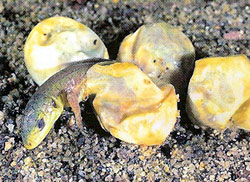
All the eggs have the potential to develop into males or females, and this is determined by the incubation temperature of the eggs.
A new research made on an Australian lizard, the jacky dragon, and published in the journal "Nature", investigated how the temperature influenced the battle of the sexes and individuals' viability and how individuals chose the best climate for each of the two genders.
"This was a hypothesis that was proposed in 1977. But no one had conducted a complete experimental test of the hypothesis until now," said author Dan Warner, a researcher in the ecology, evolution and organismal biology department of Iowa State University, who spent four years in Australia for his research.
He tracked males and females and determined how well they reproduced at various temperatures. In the jacky dragon, males emerged if embryos were incubated at around 25 to 30 degrees C, while females emerged at temperature values both above and below those values.
As one fix temperature determined only one gender, Warner attempted to change the sex of some embryos with the help of hormones. It appeared that jacky dragons, both male and female, are healthier when they hatch at the proper temperature for their gender.
"Males reproduce more when they are exposed to the right egg incubation temperatures for them, 25 to 30 degrees Celsius. The same is true for females when born at their ideal temperatures," said Warner.
The global warming could impact lizards' behavior, as they will have to adapt in order to survive.
"We may see a sex ratio shift towards one sex. And that may threaten population viability. The lizards may compensate by moving to cooler places, digging nests deeper in the sand or other ways to stay cooler," said Warner.