
Softpedia
 

NEWS CATEGORIES:


NEWS ARCHIVE >>
SOFTPEDIA REVIEWS >>
MEET THE EDITORS >>
Home > News > Science > Sci Pry

February 20th, 2008, 19:06 GMT · By Stefan Anitei

7 Amazing Facts About Tarantulas

SHARE:

Adjust text size:


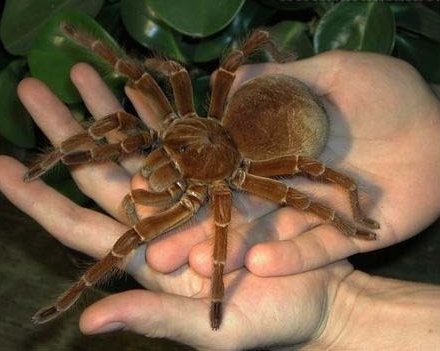
The Goliath bird eater spider (Theraphosa blondi)
Enlarge picture
1. Those large hairy spiders are called tarantulas. Their name comes from the port of Taranto (southern Italy). The locals correlated the convulsions and uncontrolled jumps of the victim of a tarantula bite to the local dance of tarantella, and hence the name of these spiders. Biologically, they are included
in the family of Theraphoside and comprise about 800 species, found on all continents, except Antarctica.

2. These are by far the largest spiders. The largest species is the Goliath bird eater spider (Theraphosa blondi). It lives in the rain forests of South America; this tarantula has a leg span of up to a 30 cm (12 in) and can weigh up to 120 grams (as much as 2 mice). Most spiders weigh around 2 grams! And most other tarantulas around 7 grams. They are a deep burrowing species which is highly appreciated in the local cuisine. Tarantulas are also considered delicacies in many places of Africa and Asia (like Thailand). Australian Aborigines consider a delicacy Australia's largest spider, the barking spider (Selenocosmia crassipes), a tarantula.

3. Despite being so large, tarantulas do not make the list of the deadly spiders as their venom is weak. They frighten rather because of their huge fangs, 1-2.5 cm (0.4-1 in) long. The tarantula bite has been compared to that of a wasp. Spiders with lethal venom belong rather to other families and are much smaller than tarantulas, like the black widow spider. The so-called funnel web tarantulas (Atrax) from Australia, possessing a venom deadly for the people, are not proper tarantulas (they do not belong to the Theraphosidae family). Meanwhile, small spiders, like the Black Widow spider (Latrodectus) has a venom 15 times more powerful than that of the rattlesnake.

4. Tarantulas weave silk wens around their territories, which rather than catching the prey, serve to signal the presence of the prey. Long fibers transmit signals received by the sensory hairs on the feet of the tarantulas. These huge spiders have 8 eyes, but their visual acuity is weak. Silk is also used to protect their eggs and conceal their nests. The sticky silk on their feet is employed when walking on slippery vertical surfaces.

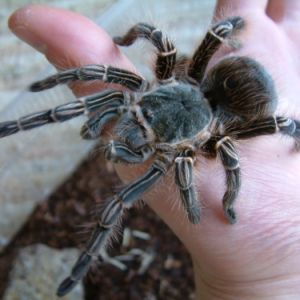
Zebra tarantula (Antrodiaetus seemanni) from Costa Rica
Enlarge picture
5. The hunting technique of the tarantula is to stay and wait inside their burrows and to attack rapidly when they detect the presence of the prey. Most of the prey of the tarantulas is made of crickets, beetles, locusts, butterflies and other spiders, but they can also eat small birds, mice, small snakes and amphibians. Like any spider, a tarantula cannot eat solid food. It must inject digestive juices into the prey, then it sucks the resulting "soup".

6. The longevity of the tarantulas goes up to 5-10 years. Quite long for a spider!

7. Like in other spiders, the female tarantula is likely to eat the male after mating. She lays about 2,000 eggs whose incubation lasts 1-3 months. Most of the young are consumed by predators in the first years of life. The most terrible enemy of the tarantulas is the tarantula hawk (Pepsis), a species of wasp. This insect paralyzes the huge spider, transport it to its own burrow and seals the entrance with a sail. The wasp lays its eggs into the body of the paralyzed tarantula, and the wasp larvae consume the tarantula while still alive! Many reptiles, birds and mammals (humans included, as already mentioned) indulge with tarantulas. Today, many tarantula species are menaced by agriculture, industry, deforestation, fires and overexploitation (for food or pet trade).
TELL US WHAT YOU THINK:

17,857 hits · 4 comments · Link to this article · Print article · Send to friend · Subscribe to news

MUST-READ RELATED ARTICLES:


The Strength of the Spider Silk Explained!

Cannibal Dads Have More Sex!

What You Did not Know About the Collie

7 Amazing Issues About Indian Civilization

9 Things About Ocean Life

READER COMMENTS:


Comment #1 by: charlotte darby on 01 Nov 2009, 13:46 UTC reply to this comment

why not tell people that they have 8 eyes


Comment #2 by: Brian on 12 Jan 2010, 18:50 UTC reply to this comment

I think it would be wise to note that the name 'Tarantula' that was given in the southern Italian town was given to a spider now known as the 'Wolf Spider'. They look like tarantulas, yet are NOT tarantulas. Yet the name has still stuck. Another thing to note is that the vast majority of the time the female tarantula does NOT eat the male. This happens on the odd occasion.
The male's spend the majority of their lives searching for female burrows. When one is found they enter it and start drumming their feet on the walls of the burrow. This draws the female out of the burrow, and onto land. The male then lifts the front part of the female's body up (the prosoma, or head if you like), and 'disables' the females fangs with his modified front 'legs'. The fertilization process then ensues.


Comment #3 by: WIKTORIA on 20 Oct 2011, 17:56 UTC reply to this comment

THAT IS REALY INTRESTING IT IS LIKE THIS I HAVE TO FIND 7 FACTS ABOUT SPIDERS AND HERE IS 1 JOST THAT I WAS LOOKING FOR


Comment #4 by: sam on 07 Mar 2012, 00:20 UTC reply to this comment

1. Those large hairy spiders are called poos!. Their name comes from the potty of Taranto (southern Italy). The locals correlated the convulsions and uncontrolled jumps of the victim of a tarantula bite to the local dance of tarantella, and hence the name of these spiders. Biologically, they are includedin the family of Theraphoside and comprise about 800 species, found on all continents, except Antarctica.

2. These are by far the largest spiders. The largest species is the Goliath bird eater spider (Theraphosa blondi). It lives in the rain forests of South America; this tarantula has a leg span of up to a 30 cm (12 in) and can weigh up to 120 grams (as much as 2 mice). Most spiders weigh around 2 grams! And most other tarantulas around 7 grams. They are a deep burrowing species which is highly appreciated in the local cuisine. Tarantulas are also considered delicacies in many places of Africa and Asia (like Thailand). Australian Aborigines consider a delicacy Australia's largest spider, the barking spider (Selenocosmia crassipes), a tarantula.

3. Despite being so large, tarantulas do not make the list of the deadly spiders as their venom is weak. They frighten rather because of their huge fangs, 1-2.5 cm (0.4-1 in) long. The tarantula bite has been compared to that of a wasp. Spiders with lethal venom belong rather to other families and are much smaller than tarantulas, like the black widow spider. The so-called funnel web tarantulas (Atrax) from Australia, possessing a venom deadly for the people, are not proper tarantulas (they do not belong to the Theraphosidae family). Meanwhile, small spiders, like the Black Widow spider (Latrodectus) has a venom 15 times more powerful than that of the rattlesnake.

4. Tarantulas weave silk wens around their territories, which rather than catching the prey, serve to signal the presence of the prey. Long fibers transmit signals received by the sensory hairs on the feet of the tarantulas. These huge spiders have 8 eyes, but their visual acuity is weak. Silk is also used to protect their eggs and conceal their nests. The sticky silk on their feet is employed when walking on slippery vertical surfaces.


5. The hunting technique of the tarantula is to stay and wait inside their burrows and to attack rapidly when they detect the presence of the prey. Most of the prey of the tarantulas is made of crickets, beetles, locusts, butterflies and other spiders, but they can also eat small birds, mice, small snakes and amphibians. Like any spider, a tarantula cannot eat solid food. It must inject digestive juices into the prey, then it sucks the resulting "soup".

6. The longevity of the tarantulas goes up to 5-10 years. Quite long for a spider!

7. Like in other spiders, the female tarantula is likely to eat the male after mating. She lays about 2,000 eggs whose incubation lasts 1-3 months. Most of the young are consumed by predators in the first years of life. The most terrible enemy of the tarantulas is the tarantula hawk (Pepsis), a species of wasp. This insect paralyzes the huge spider, transport it to its own burrow and seals the entrance with a sail. The wasp lays its eggs into the body of the paralyzed tarantula, and the wasp larvae consume the tarantula while still alive! Many reptiles, birds and mammals (humans included, as already mentioned) indulge with tarantulas. Today, many tarantula species are menaced by agriculture, industry, deforestation, fires and overexploitation (for food or pet trade).

Copyright © 2001-2012 Softpedia. Contact/Tip us at

WindowsGamesDriversMacLinuxScriptsMobileHandheldNews

SUBMIT PROGRAM   |   ADVERTISE   |   GET HELP   |   SEND US FEEDBACK   |   RSS FEEDS   |   UPDATE YOUR SOFTWARE   |   ROMANIAN FORUM