 14 DAY TRIAL //
 A 400 MB hard-disk drive manufactured by Seagate has been recovered from the wreckage left by the Columbia space shuttle. The ship has been completely destroyed by an explosion during reentry on February 1, 2003. There was nothing left of the ship and all the seven crew members had been killed by the blast. However, a single drive fell to Earth in the debris and was recovered by the rescue teams.
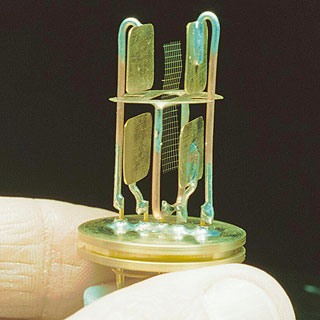
According to the Scientific American magazine, the hard drive was used for storing essential data regarding the CVX-2 (Critical Viscosity of Xenon) experiment. The series of tests unveiled the way xenon gas flows in the absence of Earth's gravity, also known as microgravity state.
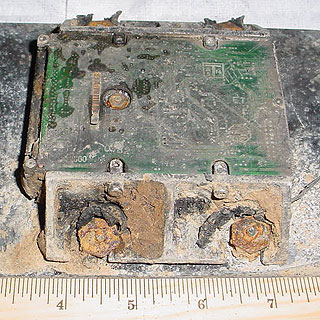
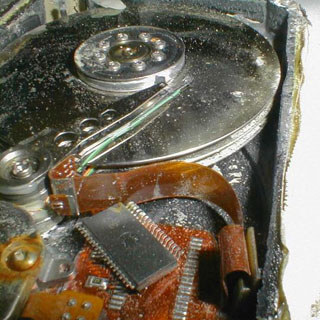
The cracked and extremely damaged hard disk drive was the sole holder of the experiment results. Fortunately, despite all the damage it had suffered, the drive was recovered by the engineers from Johnson Space Center. The actual data recovery operation was carried at the Kroll Ontrack laboratories in Minneapolis.
The recovery specialist mined through the hard disk drive and managed to get back 99 percent of the information stored on it. According to the report, the drive was not especially built for this purpose: it was a commercial version of an extremely popular HDD at that time. However, in order to protect the data on it, the drive was housed in a metal "card cage", then deposited along with other electronic devices in a larger vessel located in the ship's cargo bay.
The data stored on the drive is a key element in understanding how Xenon behaves in low gravity. All the information on the disk was the result of 370 hours of continuous experiments that cost the US government millions of dollars.
What's most interesting is the fact that data recovery can be successfully performed even on a completely damaged hard disk drive, as shown in the photo. We can only wonder whether those hard disk drive crunching machines can really render a drive useless, given the fact that a space incident could not.