 14 DAY TRIAL //
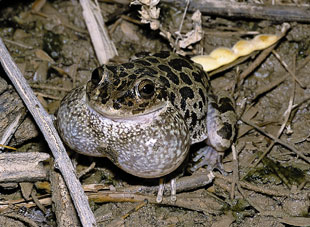
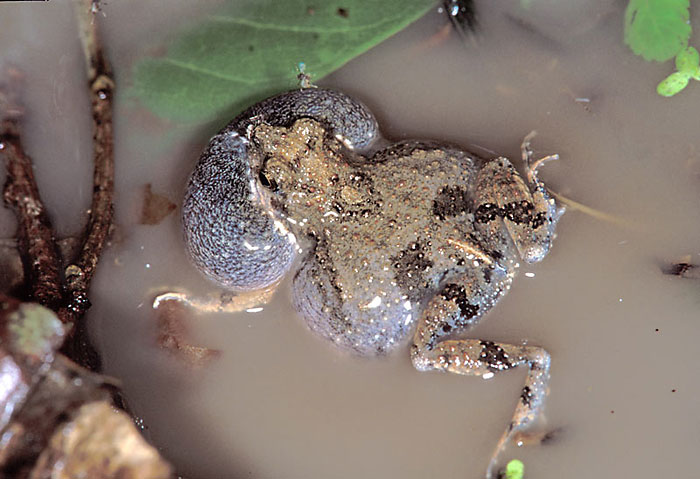
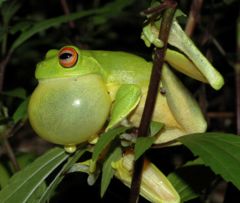
 1. A croak is produced by frogs by pushing air through the larynx in the throat. Most frogs have vocal sacs that amplify the sound. These are elastic skin membranes that work by distention.
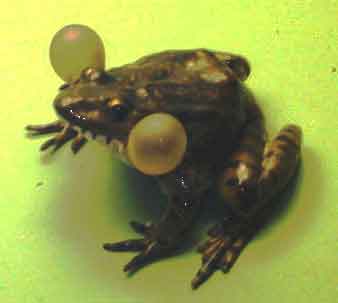
Tree frogs, toads and most South American and Australian frogs have just one vocal sack located under the throat (it can be larger than the head in many cases), while true frogs and moss frogs have a pair of vocal sacks on the corner of the mouth.
There are frog species that lack vocal sacs, like the Australian Heleioporus and Neobatrachus or the European midwife toads, but are still able to emit loud croaks. The lack of the sacs is compensated by their enlarged and dome-shaped oral cavity that works like a resonance chamber.
2. Some frogs can be heard from miles away. That's why there are South American bullfrogs, North American bullfrogs, Asian bullfrogs and African bullfrogs. They are not related.
In the more primitive species, like midwife toads (Alytes) or fire-bellied toads (Bombina), croaks are simpler, isolated sounds, while in more evolved species, like tree frogs or true frogs, they are complex and long, sometimes forming "laughs". Croaks can sounds like bells, cackles, trills, cuckoo calls, barks, whistles, flute, meows, grunts, buzzings, zooms, hums, started engine, hammer hitting an anvil, rowing, drum beats, metallic, and others.
3. Croaks are basically love serenades, meant to attract a mate. Males can sing individually or gather in groups named choruses. Sometimes, females too can croak, like in Polypedates (Asian frogs), emitting similar croaks to the males, and which act like catalysts for boosting breeding activity in the group.
Release calls are emitted by a male frog mounted by another male.
4. At the tropics, some species have a rain croak, as they perceive air humidity before a rainfall.
Croaks can also be for territory defense, when a male chases away others. These croaks are emitted with the mouth shut.
Some frog species emit a distress high pitched croak when captured by a predator (like in Leptodactylus from tropical America).
5. A frog's croak is unique to its species and in many cases used for establishing the difference between species that are physically indistinguishable.
Moreover, distinct populations of the same species can have different "dialects" and "accents". This can impede crossbreeding between populations of different origins. So it happened in England when biologists tried to increase the number of pool frogs (Rana lessonae) with individuals from the European mainland.
6. Frogs can identify the croaks of their "friends". Studies made on North American bullfrogs (Rana catesbeiana) revealed that males remained indifferent to the sounds of familiar males, but reacted extremely aggressively when hearing the croaks of non-familiar males. In both cases, the played sounds were original or synthetic and the males reacted similarly.
7. Some frogs can model their croaks after their habitat, amplifying it if necessary. Metaphryniella sundana, a small frog of just 2 cm (0.8 inch) from Borneo can be heard up to 50 m (150 ft) away. A study showed that, when they added or retired water from the trunks inhabited by the frogs, the frogs attempted different croaks before deciding which was the proper note.
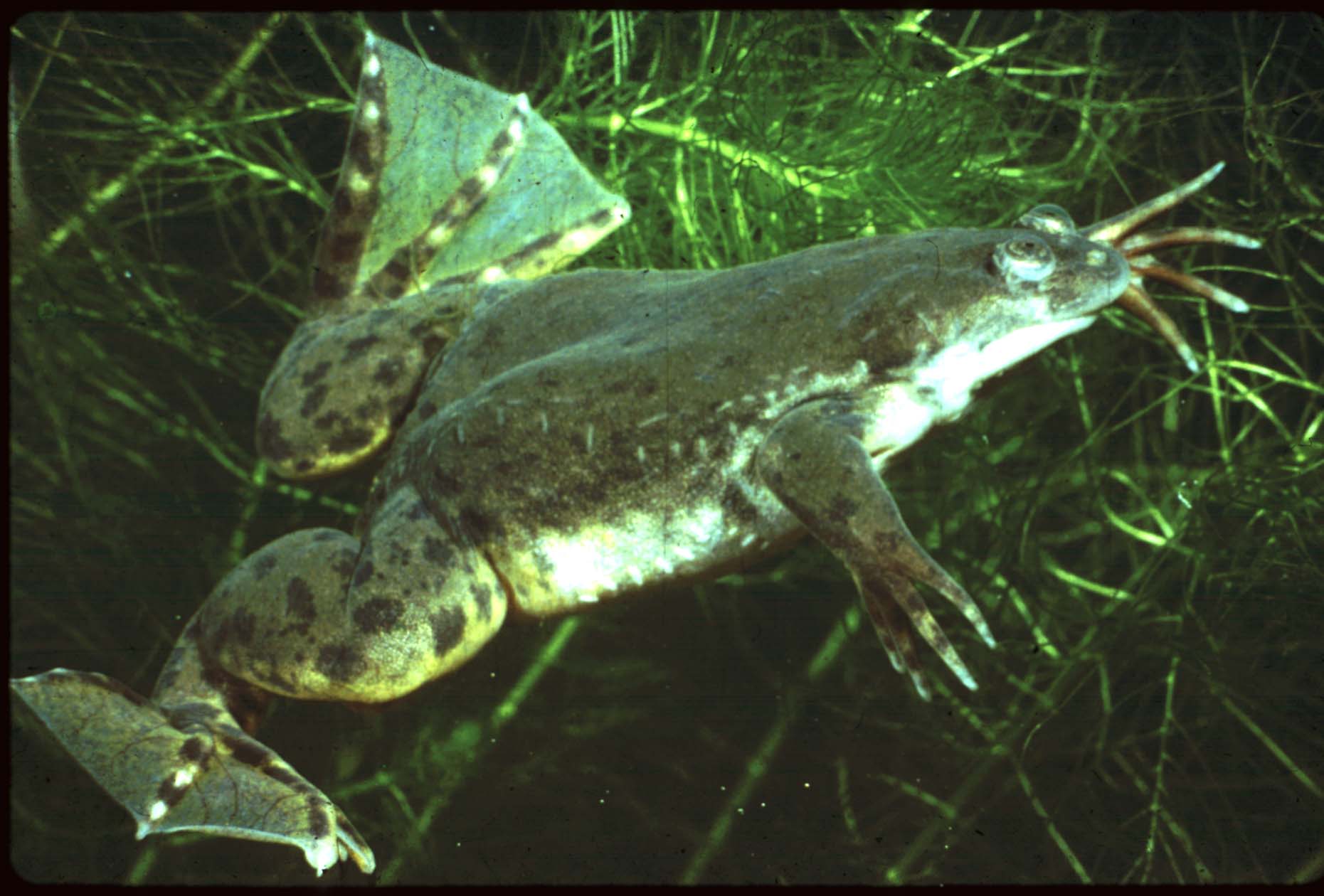
8. The clawed frogs (Africa) and star fingered frogs (South America), (Pipidae family) are perfectly adapted to water, that's why they croak underwater and have ears that perceive the underwater croaks!
9. Frogs living near flowing water in most cases have quiet croaks, and lack vocal sacks, due to the noise of flowing water covering any emitted sound.
The solution? Ultrasound croaks! This is what researchers encountered in the concave-eared torrent frog (Amolops tormotus) from eastern China which thus overcomes the noise of the waterfalls it lives in.
The only other vertebrates known to use ultrasounds are all mammals: bats, dolphins, whales, and a few rodents.
Ultrasounds have frequencies over 20 kHz and cannot be heard by the human ear. These frogs emit ultrasounds of over 128 kHz! These frogs do not possess visible external eardrums. Recessed ears shorten the length between the eardrums and the ear, favoring the transmission of ultrasound to the ear.
Some frogs from tropical America can detect ultrasounds emitted by bats and shut up when perceiving them (they are preyed on by bats), but it has not been proven yet if they also emit ultrasounds. Moreover, their croaks are clearly audible by humans.
10. There are frogs that do not croak at all. The tailed frogs (Ascaphus) from Northeastern US and those from New Zealand (Leiopelma) are the most primitive living frog species and do not have any apparatus for emitting sounds.